In this guide
A waterproof picnic blanket and a water-resistant one are not the same thing. Water-resistant means the fabric resists water coming through, to a degree that depends on how it is made. Waterproof is the stronger word: fabric makers use it for a fabric with a barrier layer, rated by the water pressure it holds.
This guide explains both words, what they mean on damp grass and sand, and what to check before you buy.
Waterproof or water-resistant: what the words mean
Three words describe how a fabric deals with water. They do not mean the same thing.
- Water-repellent is about the surface. A repellent finish is a very thin layer on the face of the fabric. It makes water roll off instead of soaking in. The standard spray test for it (ISO 4920) measures surface wetting only. It does not measure water passing through the fabric.
- Water-resistant is about water getting through. Textile labs measure how well a fabric resists water penetration. The result depends on the fibers, the yarns and the way the fabric is built. So it is a matter of degree, not a yes or a no.
- Waterproof asks the most of a fabric. Fabric makers use the word for fabrics with a barrier layer, such as a membrane or a coating. They rate those fabrics by the water pressure they hold before water gets through.

- 1Water-resistant: the woven fabric alone. The fibers, the yarns and the way it is built decide how well it resists water coming through.
- 2Water-repellent: a very thin finish on the face. Water beads and rolls off.
- 3Barrier layer, a coating: a layer applied to the woven fabric.
- 4Barrier layer, a membrane: a separate layer joined to the fabric. In rainwear, the two are fused together into a laminate.
How is that pressure measured? In a hydrostatic pressure test (ISO 811 is the international method), water presses on the fabric and the lab records how much it withstands. The result is given as a water column in millimeters.
What the difference means on damp grass and sand
On a picnic, the water is under you, and you add your weight.
That matters. One tent maker explains why its tent floors need a high rating: pressure on a floor is concentrated where you kneel, sit or lie down. A picnic blanket on wet ground sits where that floor sits: between you and the water.
So match the word to the ground:
| Ground | What to look for |
|---|---|
| Dry grass or dry sand. | Any of the three words will do. Size and pack size matter more. |
| Damp grass or damp sand. | Here the words part ways. A finish that makes water bead is tested for surface wetting. It is not tested for water pushed through under your weight. For a long sit, look for a barrier layer and a tested rating. |
| Soaked ground. | Look for a blanket sold as waterproof, with a rating. Then check the seams. |
Why the seams? A seam is a row of tiny holes joined by thread, and water can pass through them. The same tent maker seals its seams for that reason. If a blanket is quilted through its backing, ask how the stitching is sealed.

- 1Your weight presses down where you sit, kneel or lie.
- 2The water in damp ground is right under that spot.
- 3A seam up close: a row of tiny holes joined by thread. Water can pass through them unless the seam is sealed.
Types of picnic blanket
The same checks apply to any waterproof outdoor blanket, whether it is sold for picnics, the beach or camping. Here are four types. For the three we do not make, read the maker’s listed numbers.
| Type | Open size | Packs to | Suits |
|---|---|---|---|
| Padded picnic blanket | Differs by maker: read the listing | A roll or folded bundle, thicker because of the padding | Long sits, when cushioning matters more than pack size |
| Beach mat | Differs by maker: read the listing | Rolled or folded flat | A flat base on sand for a beach day |
| Insulated camping blanket | Differs by maker: read the listing | Bulkier, because insulation takes space | Keeping warm at camp, more than covering the ground |
| Our product Pocket-size, water-resistant ground cover for two: our Pocket Blanket | 55 x 60 in (140 x 152 cm) | A pouch of 4.5 x 3.5 in (11.5 x 9 cm) | Two adults who pack light |
The table shows the trade. Padding and insulation add comfort and bulk. A single thin layer packs small, without the padding or the insulation.
Backing and coatings: what keeps water out
Whatever the top feels like, one of three things deals with wet ground. Ask which one a blanket has.
| Layer | What it is |
|---|---|
| A water-repellent finish. | A surface treatment. It is not permanent: it wears off with use, dirt and repeated washing. |
| A coating. | A layer applied to a woven fabric. Tent floors are a familiar example: one maker uses tightly woven nylon with a polyurethane (PU) coating. Coatings age too, and some age faster than others. |
| A membrane. | A separate barrier layer joined to the fabric. In rainwear, fabric and membrane are fused together into a laminate. |
If a listing says “waterproof backing”, it should also say what the backing is and how it was tested. No rating and no test name means you are buying on a word.
Size for two or for four people
Go by the open size in numbers, not by “large” or “XL”.
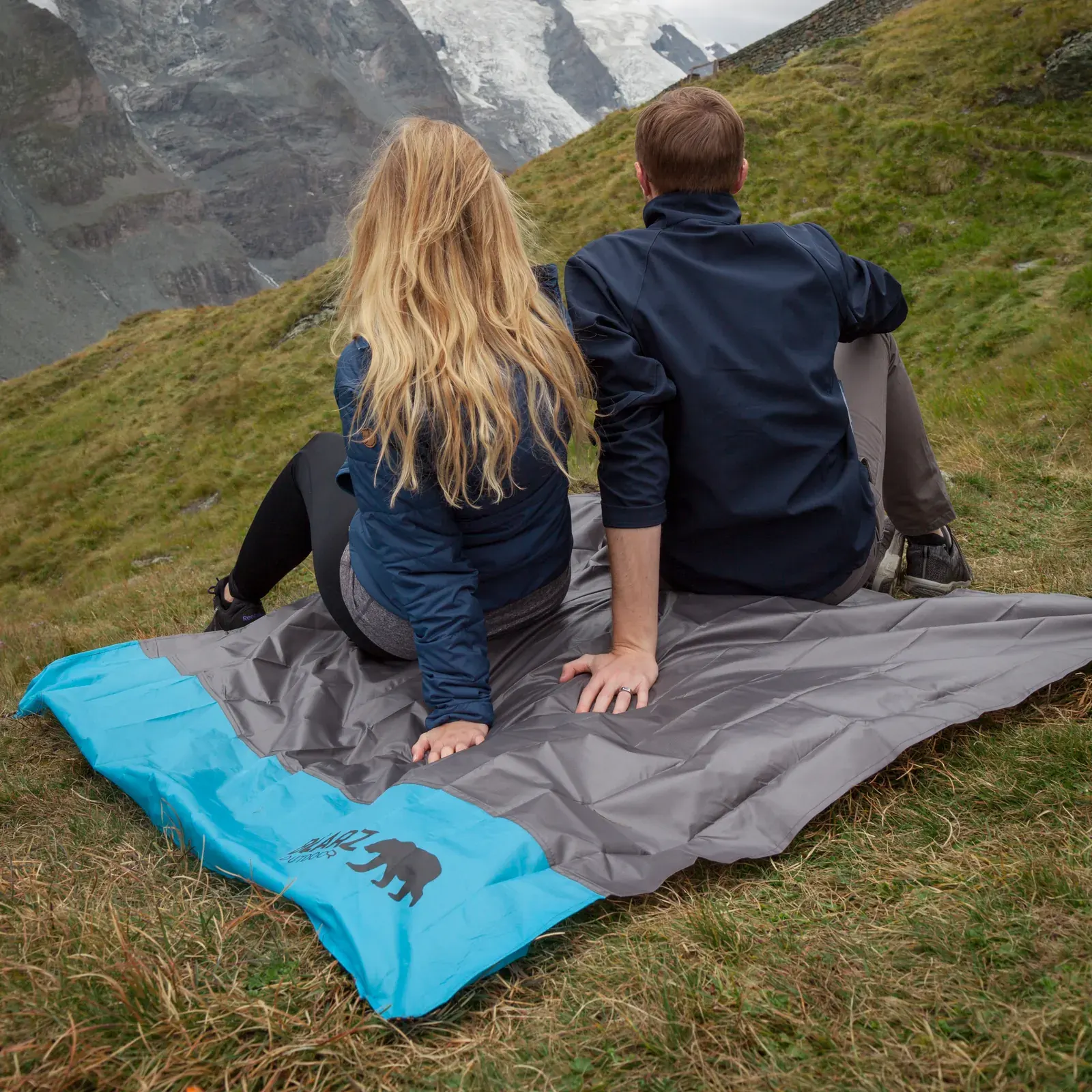
- For two adults. Our Pocket Blanket is 55 x 60 in (140 x 152 cm) and has room for two adults.
- For four adults. Look for a larger blanket, the kind sold as a large or extra large picnic blanket. Check the numbers, not the name.
Packed size and weight
Every extra layer is one more thing to carry. So decide first how you get to the spot.
- By car. Pack size matters less. Comfort can win.
- On foot, by bike or by train. Check the packed size and the weight. Check how it closes too: a carry strap, a handle or a pouch.
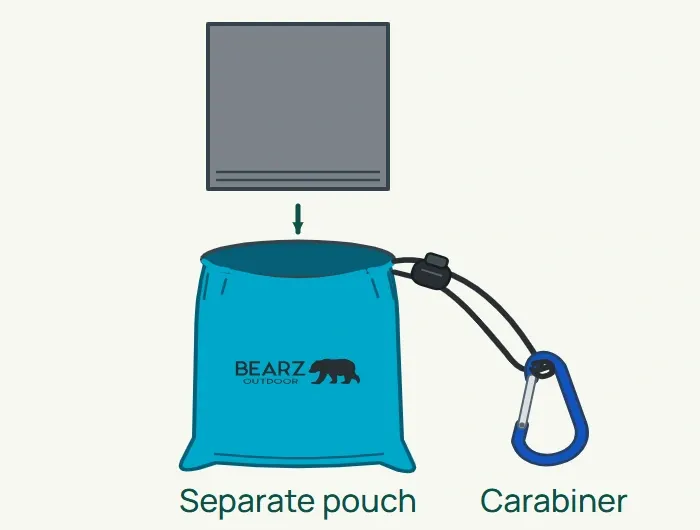
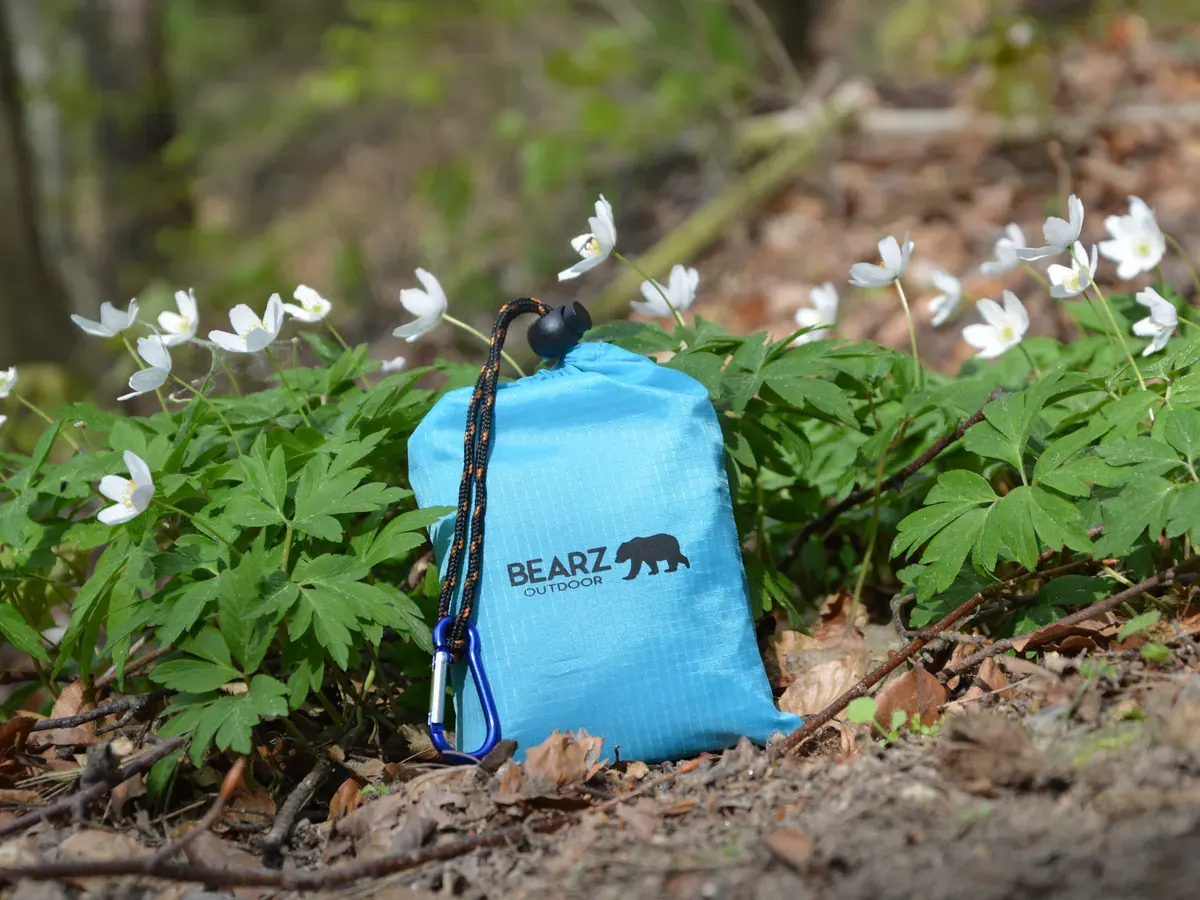
Our Pocket Blanket weighs 6.4 oz (0.18 kg). It packs into a pouch of 4.5 x 3.5 in (11.5 x 9 cm), and a carabiner clips the pouch to a bag. Folding it that small takes a method, so we wrote one down: how to fold it back into the pouch.
Care
Read the care instructions before you buy, not after the first spill. Is the blanket machine washable, or hand wash only?
Washing matters for water too, because a water-repellent finish wears off. So follow the maker’s instructions for any blanket that relies on one.
For our Pocket Blanket, hand wash it in cold water and hang it to dry.
What to check before you buy: the short list
Tick it off for each blanket you look at
Where our blanket fits, and where it does not
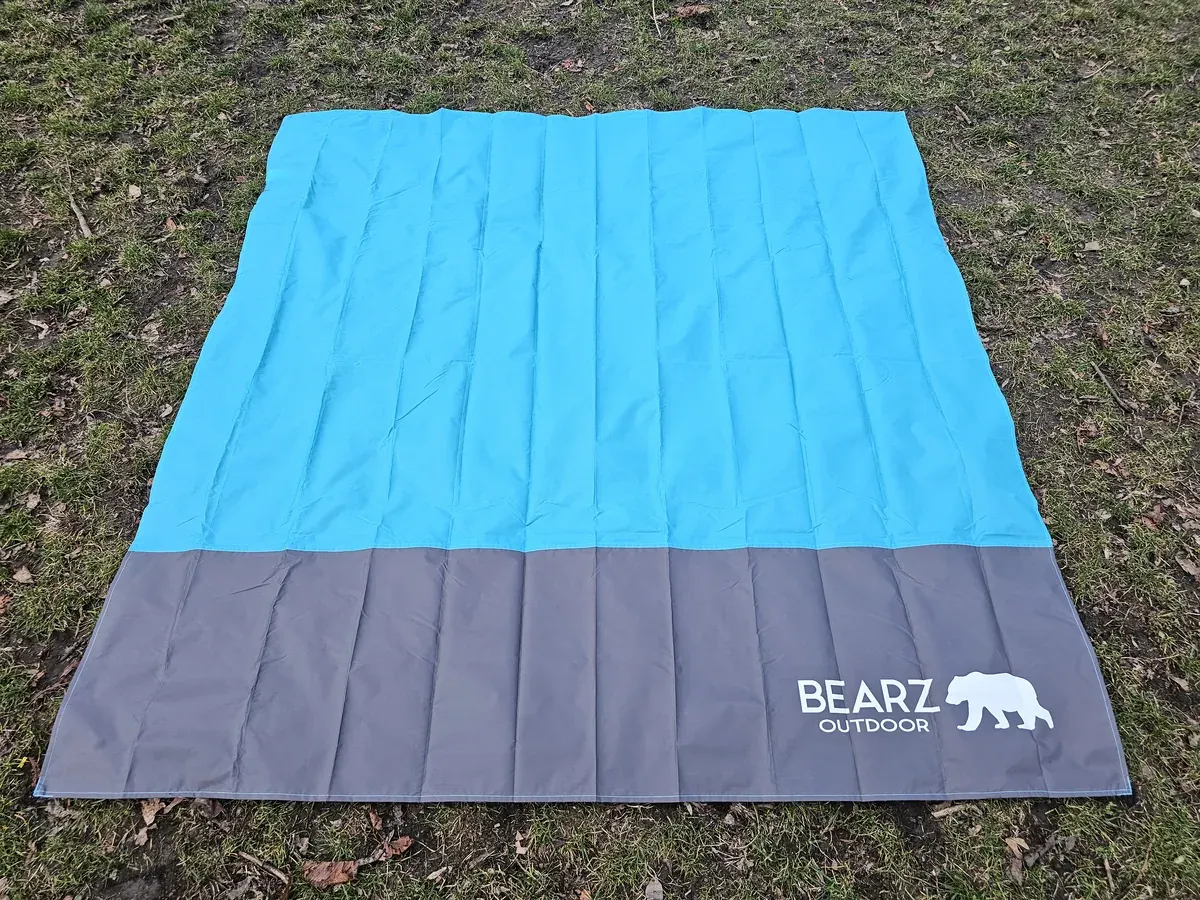
The BEARZ Outdoor Pocket Blanket is a thin, water-resistant ground cover for two adults. It is made of polyester, opens to 55 x 60 in (140 x 152 cm) and weighs 6.4 oz (0.18 kg). It comes with a pouch and a carabiner.
Where it fits
- Picnics in the park and days at the beach, for two adults. For the rest of the basket, here are our picnic essentials.
- Outdoor concerts and festivals, when you carry everything in. Our guide on what to bring to a music festival has the rest of the list.
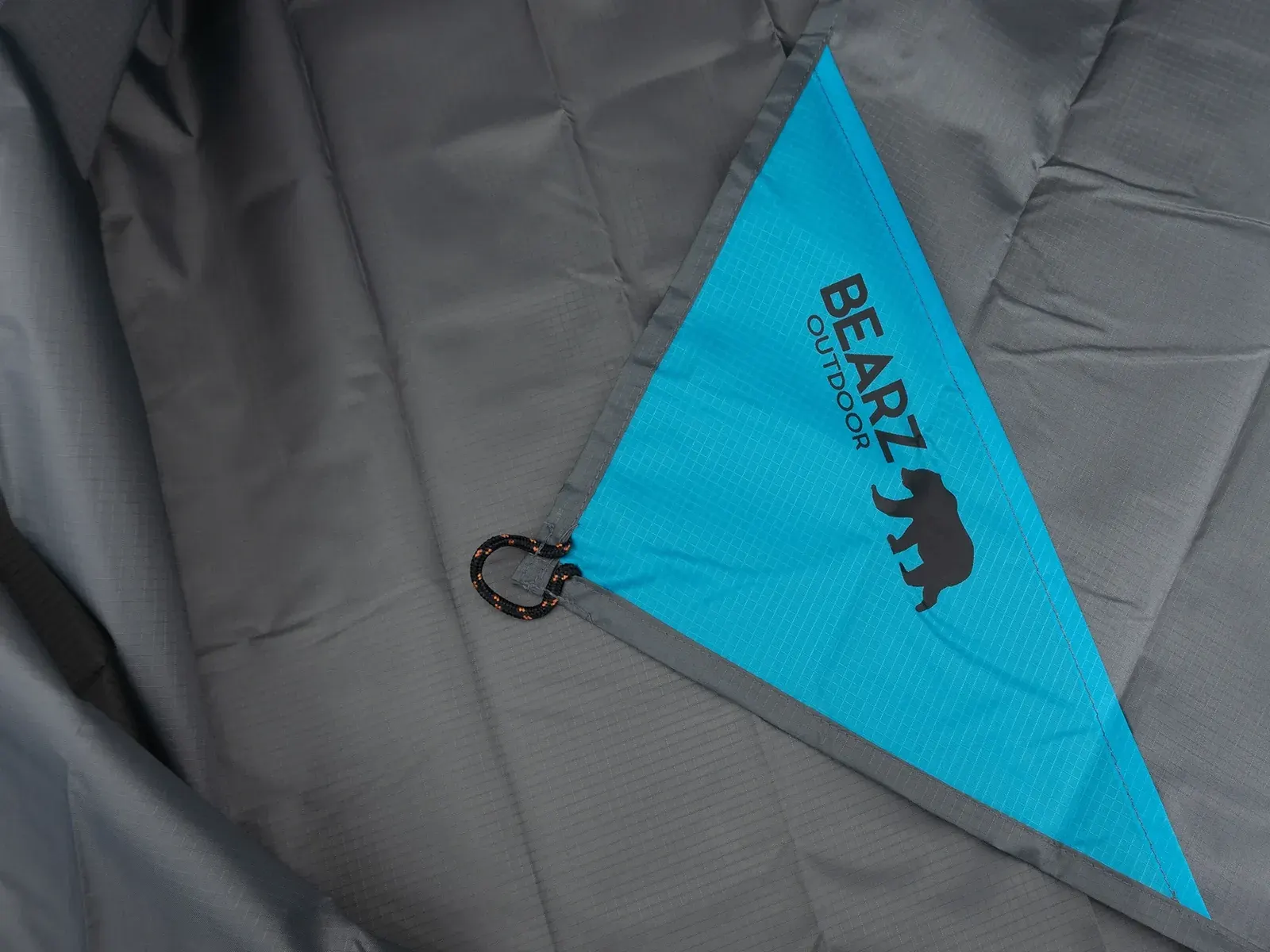
- Breezy days. You can fill the corner pockets with sand or stones to hold it down, and the corners have loops too.
Where it does not
- Not a padded blanket.
- Not one to keep you warm.
- Not waterproof.
- Not the blanket for a group. It has room for two adults.
If you need one of those, another type from the table will serve you better. The choice is yours.
Frequently asked questions
Is a water-resistant picnic blanket the same as a waterproof one?
No. Water-resistant means the fabric resists water coming through, to a degree. Waterproof is used for fabrics with a barrier layer and a pressure rating. Check which word is on the label, then look for the test behind it.
Do picnic blankets need to be waterproof?
Not always. On dry grass or dry sand, size and pack size matter more. For long sits on damp or soaked ground, look for a barrier layer, a tested rating and sealed seams.
Is the BEARZ Outdoor Pocket Blanket waterproof?
No. It is water-resistant, not waterproof. It is a thin ground cover for two adults, not a padded blanket and not one to keep you warm.
What size picnic blanket do I need for four people?
A larger one than a blanket for two. Go by the open size in numbers, and try it on the floor at home with tape before you buy.
More from the Journal