In this guide
Key points
- Wear a water-resistant, broad-spectrum sunscreen and reapply as needed.
- Warning flags: red for high hazard, yellow for medium hazard, double red when the water is closed. Meanings vary, so ask an on-duty lifeguard or check posted signs.
- Swim as close to a lifeguard as possible, and never alone.
- Drowning can be quiet or silent. Let the lifeguard perform the rescue.
- Caught in a rip current? Stay calm, don’t swim against it, and swim parallel to the shore.
Imagine this: your towel is rolled out on the sand, your umbrella casts the perfect amount of shade, your friends and family are beside you, and the ocean is a shimmering blue as far as the eye can see. What could go wrong?
We’re glad you asked!
A beach trip can be a great adventure, and it often will be. But the day can only be truly relaxing if you stay on top of some basic ocean safety tips. To help you and your loved ones know what to look for, there are a few things you should keep in mind.
Stick to the Shade
In addition to increasing your risk of cancer, sunburns can cause some painful blistering that can really ruin your day. Sunburn raises the risk of skin cancer: five or more sunburns more than double the risk of melanoma. Be sure to wear a water-resistant, broad-spectrum sunscreen and reapply as needed.
Don’t forget that extended sun exposure can lead to severe health issues as well, including heat exhaustion and heatstroke. To avoid these, wear wide-brimmed hats, drink plenty of water, and stay under shady umbrellas or tents when you can.

Be on the lookout for signs of heat exhaustion in any friend or family member:
- Dizziness
- Nausea
- Tiredness or weakness
If you notice these signs:
- Move them to shade or somewhere cooler.
- Cool them down with cool, wet cloths and give them sips of water.
- Get medical help if they don’t feel better within 30 minutes, if they are being sick, or if they get worse.
Know What Warning Flags Mean
Depending on the country and the beach you’re headed to, you’ll see different colored flags for different things. Research in advance, ask an on-duty lifeguard, or check posted signs in the area to check the meanings of these flags.
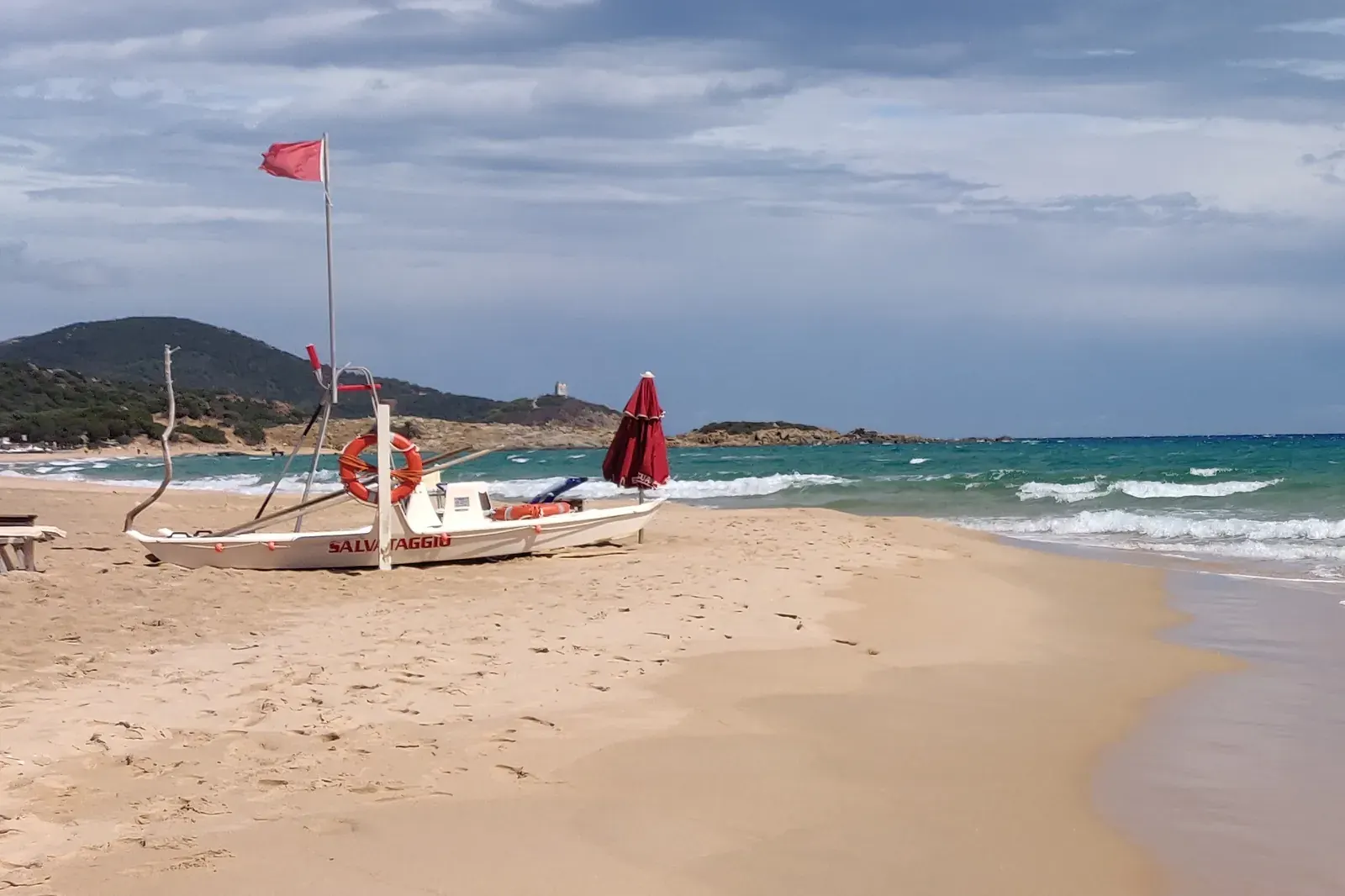
Beach Flag Meanings by Country
Flags mean different things in different countries, and some countries fly flags that others do not use at all. Below are the flags that lifesaving bodies and authorities say they use in the places we could source, each taken from their own page, with regional and local differences stated.
International Standard and United States
The International Life Saving Federation (ILS) published guidelines for beach flags, approved in 2004 and again in 2010. The United States Lifesaving Association (USLA) lists the same flags, and says that some or all of them may be used and that this is a local decision.
Beach warning flags in the ILS guidelines and the USLA system
| Flag | What it means |
|---|---|
| Red | High hazard. Rough conditions such as strong surf or currents; all swimmers are discouraged from entering the water. |
| Double red | The water is closed to public use. |
| Yellow | Medium hazard. Moderate surf or currents; weak swimmers are discouraged from entering the water. |
| Purple | Marine pests such as jellyfish or stingrays. It does not mean sharks. |
| Red over yellow | The area is protected by lifeguards, and swimming is permitted there (ILS). |
| Black and white, quartered | An area used by surfboards and other non-powered watercraft. |
| Red and white, quartered | Emergency evacuation: swimmers should leave the water because of an emergency. |
| Orange windsock | Offshore winds; unsafe for inflatables in the water. |
| Green | Not in the ILS list; the ILS considered it and decided not to adopt it. Some US beaches fly it for calm or mild conditions (USLA). |
Some or all of these flags may be used, and the choice is local. Read the signs at the beach and ask the lifeguard.
United Kingdom and Ireland
The RNLI in the UK and Irish Water Safety in Ireland describe the same three flags. The RNLI also lists the orange windsock. The flag lists we captured from both include no yellow and no green flag.
Beach flags: RNLI (UK) and Irish Water Safety (Ireland)
| Flag | What it means |
|---|---|
| Red and yellow | The lifeguarded area, and the safest place to swim and bodyboard. |
| Black and white, checkered | Zone for surfboards, kayaks and other non-powered craft. Never swim or bodyboard here. |
| Red | Dangerous conditions: do not enter the water. |
| Orange windsock | No inflatables on the water. Indicates offshore or strong wind. |
Irish Water Safety source: a leaflet (file dated 2010). The windsock is from the RNLI page only.
Germany
The DLRG, the German lifeguard organization, lists these flags.
Beach warning flags in Germany (DLRG)
| Flag | What it means |
|---|---|
| Red and yellow | A guarded bathing area; lifeguards are on duty. |
| Yellow | Dangerous conditions. Only experienced swimmers should swim; children, older people and inexperienced swimmers should stay out. |
| Red | Acute danger, such as currents, high waves or polluted water. Do not swim or bathe, even if you are an experienced swimmer. |
| Black and white, quartered | A water sports area. Swimming and bathing are not allowed here. |
| Green | Not an official flag, so it carries no meaning. The DLRG says to look for a red and yellow flag instead. |
Meanings follow the DLRG. Read the signs at the beach and ask the lifeguard.
Spain (regional rules)
We found no national Spanish source for beach flags; the sources we found are regional. The table below covers only the Balearic Islands, the Canary Islands and Andalusia, each from its own authority, and these are regional rules, not Spain as a whole. We found no usable source for Catalonia or other regions, which may differ.
Beach flags in Andalusia, the Balearic Islands and the Canary Islands
| Flag | What it means |
|---|---|
| Green | Bathing is allowed (Balearic and Canary Islands); no restrictions on bathing (Andalusia). |
| Yellow | Take care because of the danger (Balearic Islands); caution, and if you are not a good swimmer or have children with you, better not to go in (Canary Islands); certain limits and restrictions on bathing (Andalusia). |
| Red | Bathing is prohibited (all three). |
| Orange | The lifeguard is absent (Balearic Islands). A different meaning in the Canary Islands, where an orange flag or a flag with a jellyfish means danger from jellyfish or temporary pollution. |
| Black | Beach closed because of a toxic spill or extreme risk; no bathing and no access to the water (Canary Islands). |
Regional rules; sources: Junta de Andalucía (2020 decree), 112 Islas Baleares, Servicio Canario de la Salud. Not checked for other regions.
In the Valencia region, a 2020 decree gives each beach one identifying flag by its classification: green for free beaches, yellow for dangerous ones and red for beaches where use is prohibited (Generalitat press note). We captured only the press note, not the decree text, so we do not say how this flag relates to the flag flown on the day.
France
A decree in force since 1 March 2022 (Décret 2022-105) sets the French flags: red, yellow and green on the mast and a red-over-yellow pair that marks the supervised bathing zone. The national sea rescue society, SNSM, also describes purple and black-and-white flags, which are not in the decree text; the decree says its signs are completed by an AFNOR specification. In France, green and yellow both describe supervised bathing.
Beach flags in France (decree 2022-105 and SNSM)
| Flag | What it means |
|---|---|
| Green | Supervised bathing, no apparent danger. |
| Yellow | Supervised bathing with limited or marked danger. The SNSM says it replaced the orange flag. |
| Red | Bathing is prohibited. |
| Red and yellow | Two flags that mark the supervised bathing zone. |
| Purple | Water pollution or dangerous aquatic species (SNSM). |
| Black and white, checkered | A water sports zone where bathing is risky but allowed (SNSM). |
| No flag | Bathing is not supervised (SNSM). |
Green, yellow, red and red-yellow are from the 2022 decree. Purple, black-and-white and no flag are from the SNSM page only. The red flag can also fly when no lifeguard is on duty (SNSM).
Italy (one local ordinance)
We captured one Italian source: the bathing safety ordinance of the Capitaneria di Porto di Olbia in Sardinia. It adopts a flag system that it calls widely used in Europe. It applies to that harbor office only, and other Italian coasts may differ.
Beach flags in one Italian ordinance (Olbia, Sardinia)
| Flag | What it means |
|---|---|
| Green | Lifeguard service active, favorable conditions. |
| Yellow | Service active, sea and weather conditions potentially risky. |
| Red | Bathing is not advised or is dangerous, with or without the service active. |
One local ordinance, not a national rule. The red flag is also hoisted when the lifeguard service cannot be provided.
Portugal
A national rule on beach signage equipment (Portaria 311/2015, annex A) says the signal flags are red, yellow, green or blue-and-white checkered. It says the rules for using them are in each beach’s notice (the “edital de praia”), so we do not give a table. Read the notice posted at the beach.
Netherlands
Reddingsbrigade Nederland, the Dutch lifeguard organization, lists five flags and no green flag.
Beach flags in the Netherlands (Reddingsbrigade Nederland)
| Flag | What it means |
|---|---|
| Red and yellow | The rescue post is open and lifeguards are supervising. |
| Red | Very dangerous. Do not swim; bathing, swimming and other activities in or on the water are strongly discouraged. |
| Yellow | Dangerous. Bathing and swimming are discouraged; swimmers must be extra careful and alert. |
| Orange | Do not use inflatable flotation devices: there is an offshore wind, and it is unsafe to take them onto the water. |
| Purple | Dangerous sea animals or polluted swimming water. Bathing and swimming are discouraged. |
Read the signs at the beach and ask the lifeguard.
Australia
Surf Life Saving Australia says to swim between the red and yellow flags. If there are none, check with the lifeguards, and if you are unsure, do not go in the water.
Beach flags in Australia (Surf Life Saving Australia)
| Flag | What it means |
|---|---|
| Red and yellow | Swim between the flags. |
| Red | No swimming. |
| Yellow | Caution required. Potential hazards. |
| Red and white | Evacuate the water. |
| Black and white | Boundary of the area for surfcraft. |
Source: Beachsafe, run by Surf Life Saving Australia.
Canada (one national park)
This is the system of one park, Prince Edward Island National Park, from Parks Canada. We found no national Canadian page that states the flags, so it does not speak for the rest of the country.
Beach flags in Prince Edward Island National Park (Parks Canada)
| Flag | What it means |
|---|---|
| Red | Dangerous surf; no swimming. |
| Yellow | Moderate surf. |
| Green | Calm surf. |
| Orange | Strong offshore winds. |
| Purple | Jellyfish. |
One park only. Flags fly during supervised hours; no flags does not mean safe water.
Not sure what a flag means?
Check the signs at the beach and ask the lifeguard. The ILS says its flags are only to be used on beaches where qualified lifesavers are on duty, Parks Canada says the absence of flags does not assure safe waters, and Surf Life Saving Australia says that without red and yellow flags you should check with the lifeguards and, if unsure, not go in the water.
We found no source we could use for Croatia, Greece or Turkey, so this section does not cover them, and it does not cover any country that is not named above.
Reconsider Your Swimming Skills
Knowing how to swim can have a significant impact on drowning risk. This is especially true for small children: in one study of children aged 1 to 4, formal swimming lessons were linked to an 88 percent lower risk of drowning, although the estimate was imprecise.
But even for older, experienced swimmers, it’s critical to remember that swimming in the ocean is not like swimming in a pool. Be prepared for strong surf, unexpected waves, steep drop-offs in the ocean floor, and intense currents. If you or anyone with you feels unsure in the water, wear a lifejacket that fits and suits the activity.
You should also make sure to swim as close to a lifeguard as possible. Keep in mind that the movement of the water will push you further down the shore over time, so you’ll need to walk or swim back to your starting point periodically. It may be a good idea to set down your towel and essential beach gear near the lifeguard if possible.
Know the Signs of Drowning
On that note, it’s also important to know what drowning looks like, as it’s often not as dramatic as you’d expect. In fact, drowning can even be quiet or silent.
As mentioned above, use the buddy system to keep an eye on friends and family. Watch for swimmers who:
- Are gasping
- Have their head low in the water
- Are swimming with eyes closed or hair in their face
Take Care in Strong Currents and Waves
One of the most important concerns when it comes to beach safety is paying attention to the sea itself.
You’ve probably heard of fearsome rip currents, or powerful movements of water that occur perpendicular to the shore. These currents can catch you off guard: they pull swimmers away from shore, and they can form on calm, sunny days. Their speed varies, and the fastest measured was about 8 ft (2.4 m) per second, faster than an Olympic swimmer.
If you’re caught in one, know what to do:
- Stay calm. A rip current pulls you out, not under.
- Don’t swim against the current.
- Swim parallel to the shore until you are out of the pull.
- Then swim at an angle toward the shore.
- Can’t get out? Float or tread water, face the shore, and yell and wave for help.

- 1The rip current flows straight out, perpendicular to the shore. Do not swim straight back against it (crossed-out arrow).
- 2Swim parallel to the shore, out of the rushing water.
- 3Then swim diagonally toward the shore.
You should also pay attention when the waves are particularly powerful. Surfers love a good wave, but strong ones can cause serious injuries, especially shore breaks crashing onto the sand: people thrown head first into the bottom can injure their neck and spine. In breaking waves, keep your hands in front of you to protect your head and neck.

- 1Gentle slope: the wave breaks out in the water and rolls in as foam.
- 2Steep slope: the wave breaks directly onto the sand, a shore break.
Keep Ocean Safety Top of Mind
In the excitement of preparing for your perfect day in the sea and on the sand, it’s easy to forget how scarily powerful Mother Nature can be. Remember to consider the natural threats of the surf and sun, and keep your party’s ocean safety in mind throughout the day for the perfect trip.
If you’re heading out for your next beach adventure, read our beach hacks and don’t forget to grab the gear you need on your next excursion into the great outdoors!
Sources
- United States Lifesaving Association: beach warning flags
- United States Lifesaving Association: rip currents
- US National Weather Service: surviving a rip current
- US National Weather Service: dangerous waves
- US National Weather Service and CDC: heat cramps, exhaustion, stroke
- NHS: heat exhaustion and heatstroke
- European Commission: 112, the EU’s emergency number
- International Life Saving Federation: beach safety and information flags (LPS 14)
- RNLI: beach flags and signs
- Irish Water Safety: a guide to a safe time at the seaside (PDF)
- DLRG: flags at the beach and their meaning
- Junta de Andalucía: Decreto-ley 12/2020, article 9 (via BOE.es)
- 112 Islas Baleares: En la playa, seguros
- Servicio Canario de la Salud: Zonas de baño
- 112CV Generalitat Valenciana: decree on beach safety (press note)
- Journal officiel, Décret 2022-105 on beach signage (France)
- SNSM: beach flags in France
- Capitaneria di Porto di Olbia: Ordinanza di sicurezza balneare
- Diário da República: Portaria 311/2015, Annex A, article 11 (via AMN)
- Reddingsbrigade Nederland: flags
- Surf Life Saving Australia: flags and signs
- Parks Canada: water safety, Prince Edward Island National Park