In this guide
Packing cubes are worth it if you share a suitcase or live out of your bag between stops. You can lift out your clothes while your partner’s stay put. For a weekend with a late arrival, a cube earns its place if you can pull out your pajamas without emptying the bag onto a shared bed. If you already pack light and can reach everything through the open lid, skip the set.
When do packing cubes help?
Think about the last thing you had to hunt for on a trip. If it was your daughter’s swimsuit, give her swim gear a pouch she can recognize. If it was clean socks on the morning you checked out, keep a pair with the clothes you’ll wear home. Decide who needs to find each bundle and when.
Choose how to group your clothes
| Trip | Pack together | Where it pays off |
|---|---|---|
| Sharing a bag | Give each traveler a packing cube in a different color, or tie a ribbon to yours. | Either person can grab a change of clothes without unfolding the other’s shirts. |
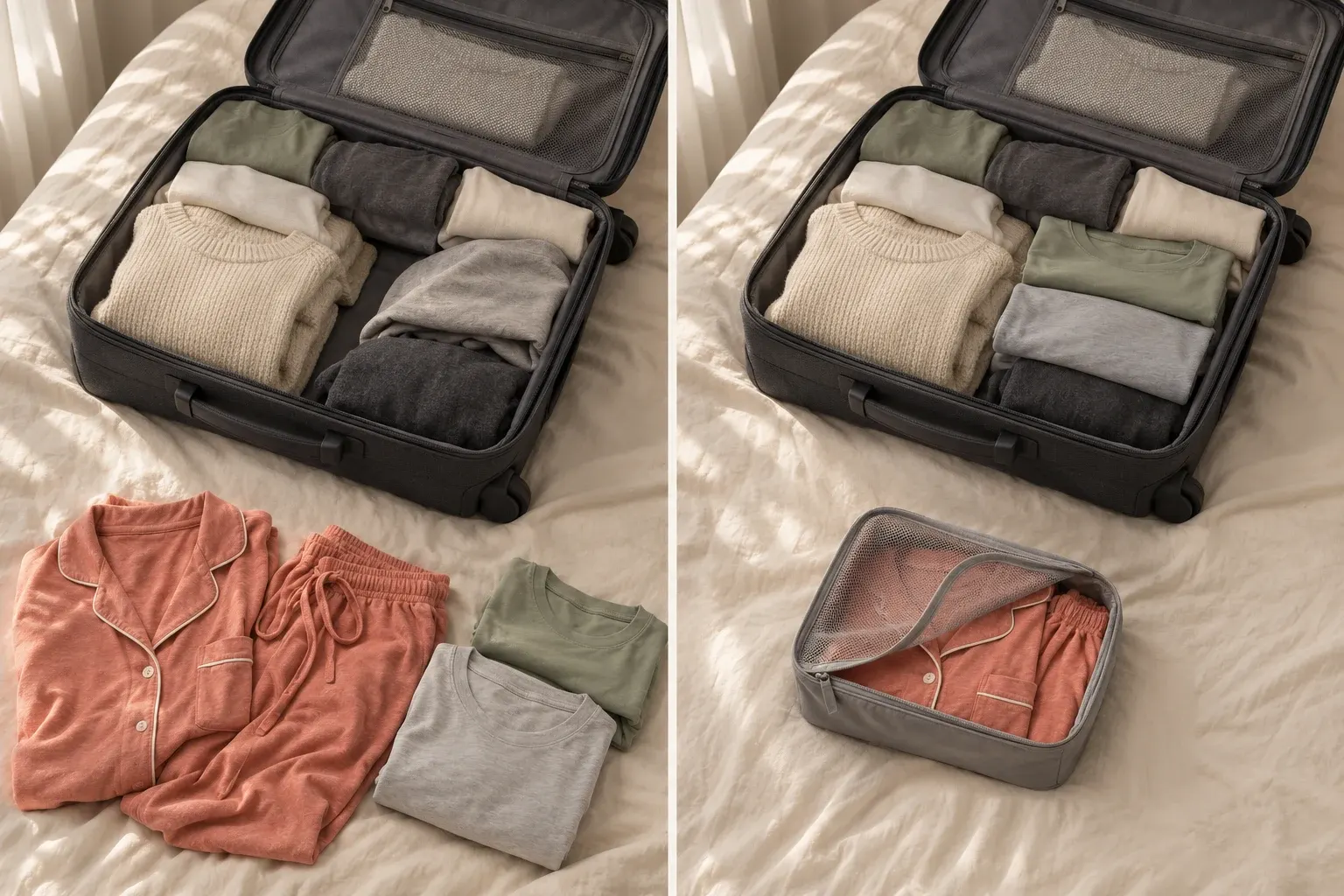
| Weekend away | Put sleepwear and fresh underwear together near the opening. | When you arrive late, take the whole bundle straight to the bathroom. |
| Changing rooms along the way | Group everyday tops together and keep the warmer layers separate. | Lift the tops onto a shelf at each stop and leave the layers packed until you want them. |
| Taking laundry home | Slip an empty laundry bag alongside your clean clothes. | Move worn items into it as you go. Let it take up the room you’ve cleared. |
When should you skip them?
For an overnight stay, lay your spare shirt over your underwear and tuck them into the bag together. If you unpack straight into a dresser when you arrive, that’s all the sorting you may need. If the only thing you want to separate is dirty clothes, an old pillowcase will do.
Look at the inside of your luggage, too. A duffel with a narrow mouth can swallow a bundle that you then have to turn sideways to get out. In a tapered backpack, try tucking loose socks into the corners beside your shoes. Leave the packing cube at home if it blocks the opening or leaves those corners empty.
Do packing cubes save space?
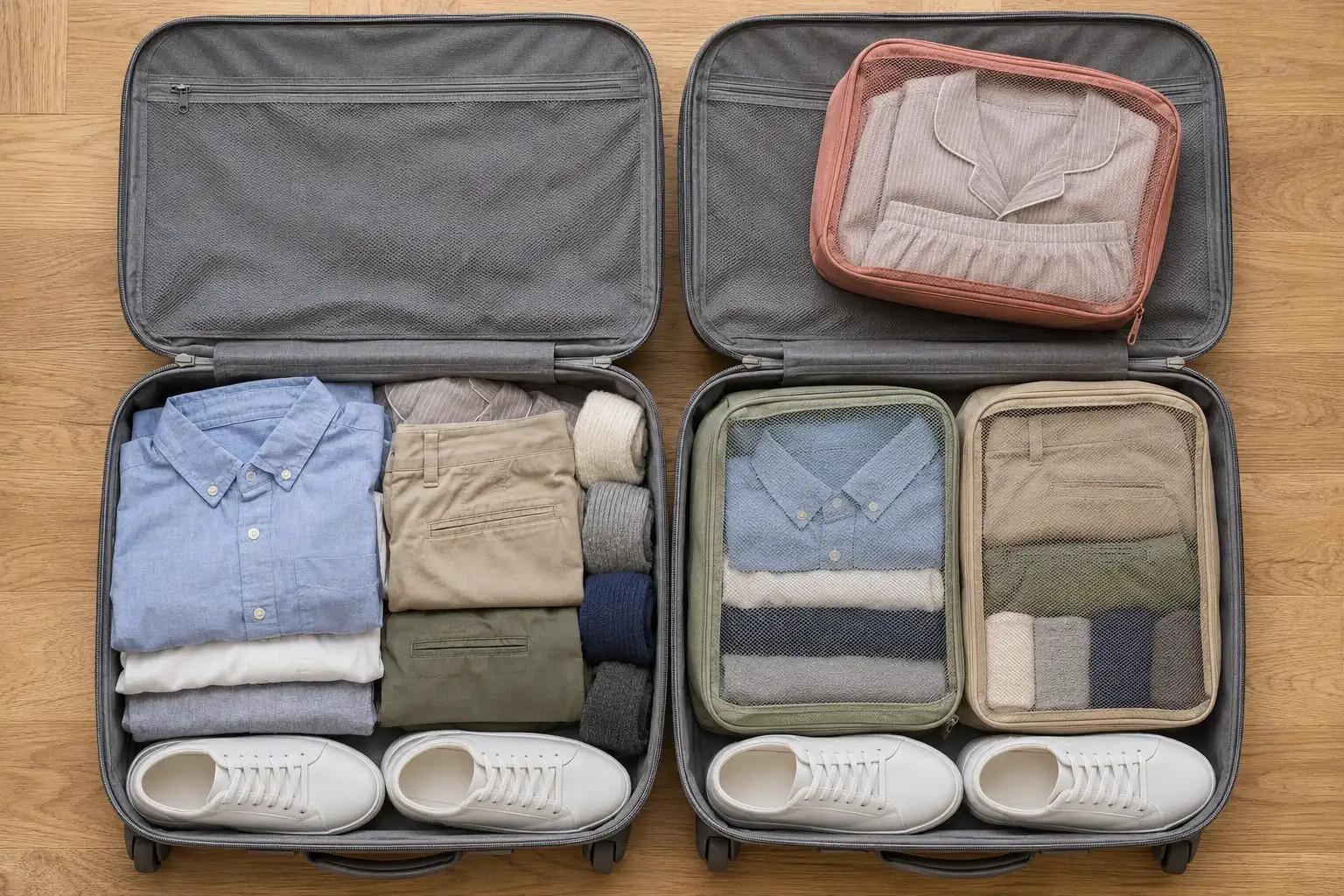
Regular packing cubes keep a stack together. You may find a better place for that stack in a suitcase, but a neat rectangle can also leave an awkward gap beside a shoe. Try the layout with the shoes you actually plan to bring.
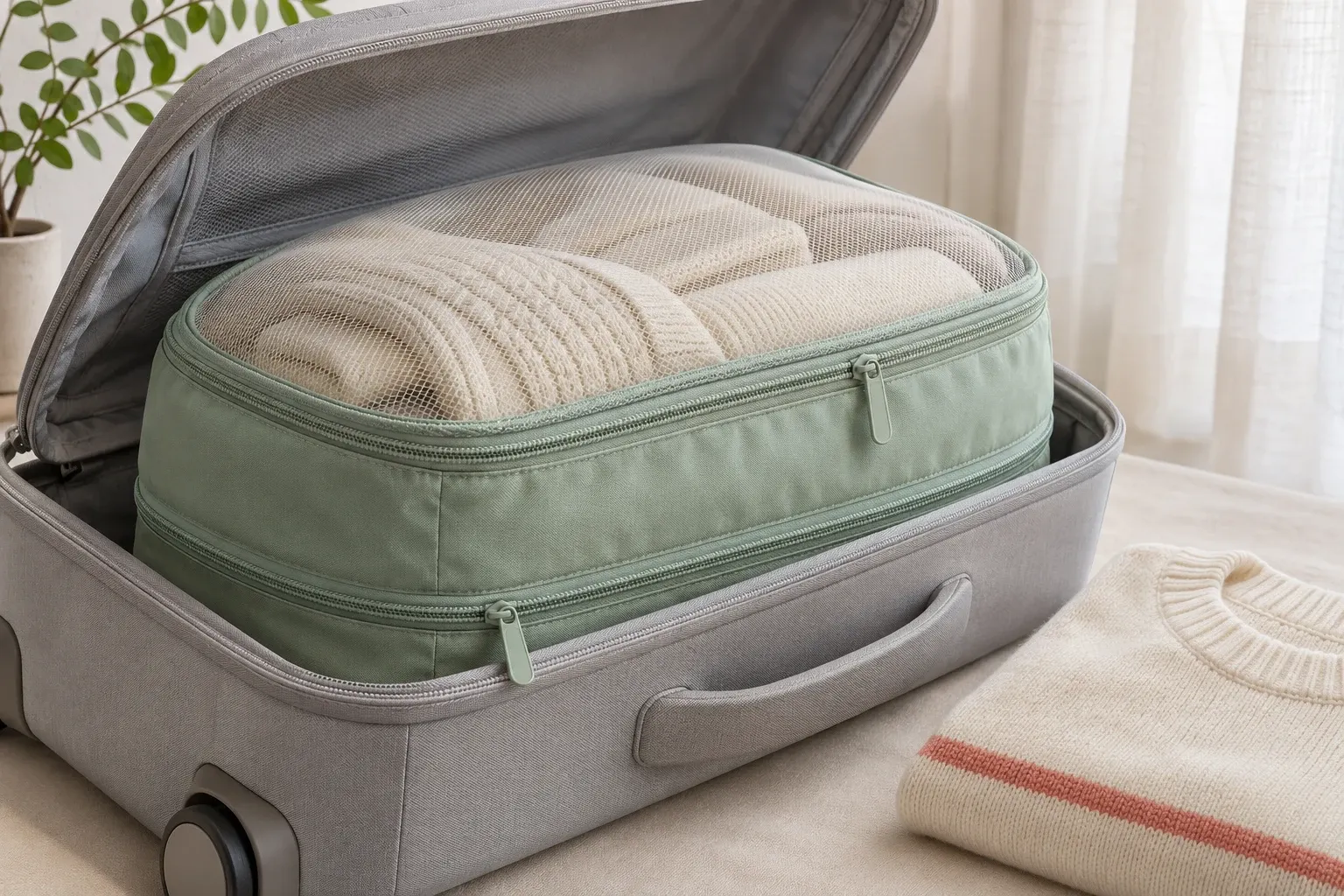
A compression cube has a zipper that draws the packed clothing into a smaller bundle. Try compression packing cubes for soft layers you plan to leave packed until the weather changes. For stiff jeans, press the folded stack with your hand before shopping. If it barely gives, leave it flat. If weight is the problem, lift the bag with the clothes inside. Squeezing a sweater flatter still leaves you carrying the whole sweater plus its pouch.
Which size and type fit your bag?
Put your shoes and toiletry kit in their usual spots. Measure the open patch beside them. For depth, start at the highest point beneath the stack, including any raised handle rails. Before ordering a packing cube, fold a shirt to the listed footprint and build the pile up to the listed depth. Close the lid, then try lifting the stack through the opening. Check that you can still get a hand around it.
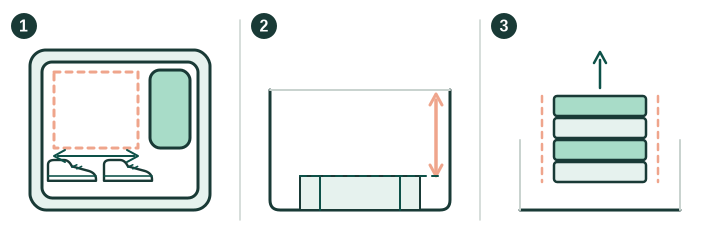
- 1
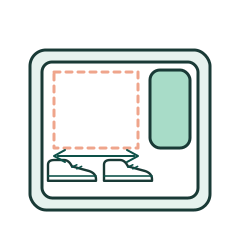 Put your shoes and toiletry kit in their usual spots, then measure the open patch beside them
- 2
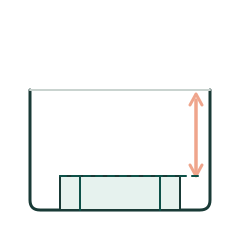 For depth, start at the highest point beneath the stack, including any raised handle rails
- 3
 Close the lid, then try lifting the stack through the opening
A small packing cube suits socks or swimwear. Try a medium for folded tops or a complete outfit. Consider a large only if the clothes you want to lift out together take up that much of the case. If you have to move everyone’s things to reach your own, split the pile.
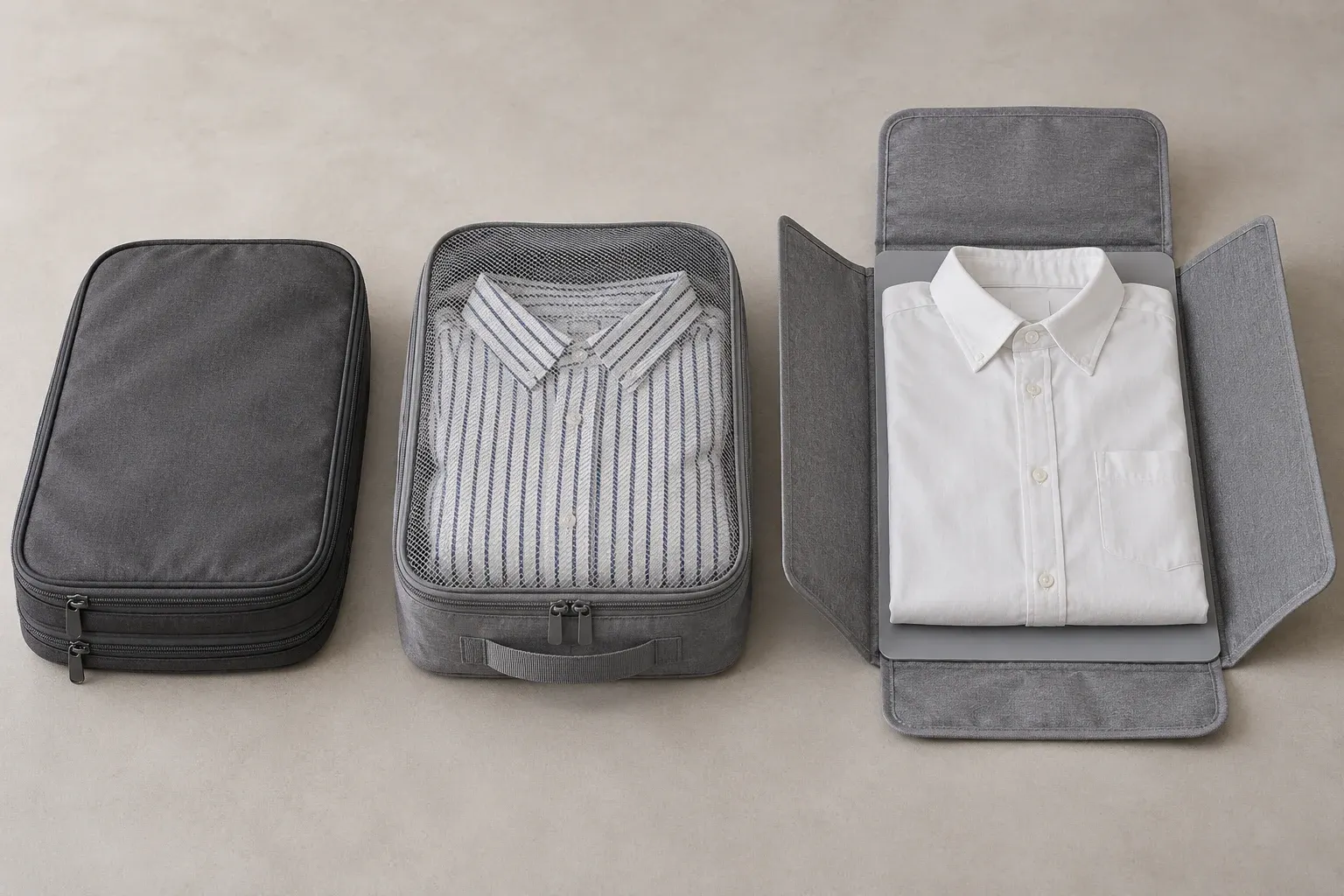
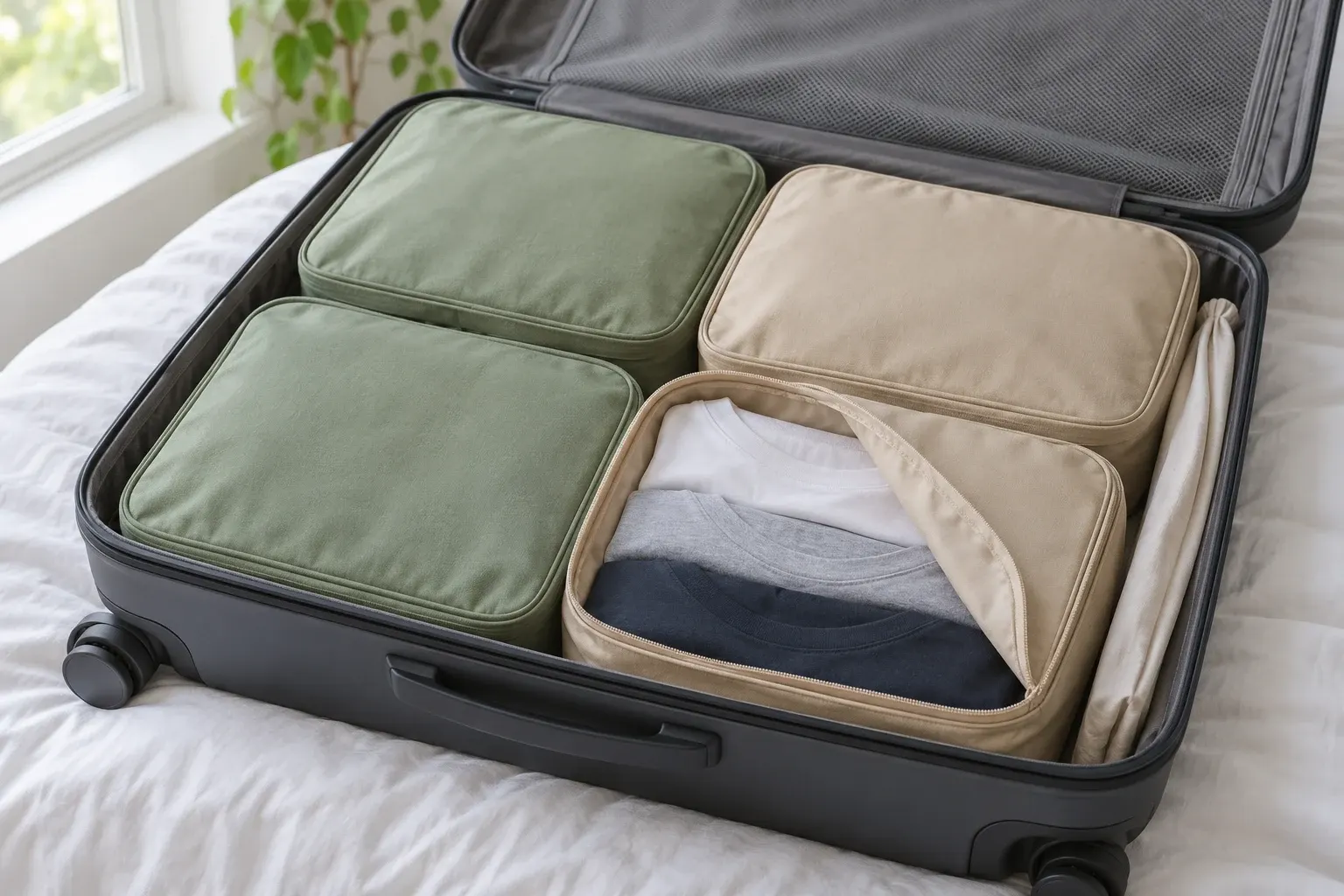
- Mesh. A mesh panel lets you see the clothing inside. Choose it if you’d like to spot a particular shirt before opening the cube. Pick a solid lid if you’d prefer to keep underwear out of view.
- Structured. For shirts you’d like to keep folded, look for a flat-sided organizer that fits the width of your folded shirt. Some structured garment folders include a folding board. Leave space for the collar when closing the case.
- Compression. Choose a compression cube when the height of a soft stack is the sticking point. Close the main compartment, run the compression zipper around the edge and feel the middle. If it domes above the rim of the bag, take out a layer.
Disclosure: BEARZ Outdoor® takes part in the Amazon Associates program, and some links on this page are Associates links.
A compression packing cube
Good for: A soft layer you want to lift out with the rest of your clothes.
Good to know: Check the footprint against the space beside your shoes.
How to use packing cubes for a weekend
Start with the clothes on your weekend trip packing list. Set Friday’s travel outfit aside to wear. Fold Saturday’s shirt to the width of your packing cube, lay the pants beneath it and tuck socks along the side. If you’ll choose a tee in the morning, roll the tees and stand them side by side so you can pick a color from above.
Keep the rain jacket loose where you can grab it on the way from the station. At the room, lift the clothes onto a shelf. If you brought a backpack, you can take it out for the day. On your last evening, set tomorrow’s outfit aside, pack the dry laundry, then try closing the bag. If the laundry fills the space where the clean stack sat, flatten the empty organizer and tuck it against the lining.
Where does a rolled towel fit?
The BEARZ Outdoor Microfiber Towel Set includes a travel towel and a face cloth. If you’re stopping for a swim before check-in, tuck the cloth into your swimsuit and put the towel beside it. For a long gap beside the clothes, fold the dry towel lengthwise until its short hem fits along the gap, then roll from that hem. If the roll props up the lid, open it out and fold it flat across the top. For a roll you can lift without holding the tail, follow the tucked-end method in how to roll towels.
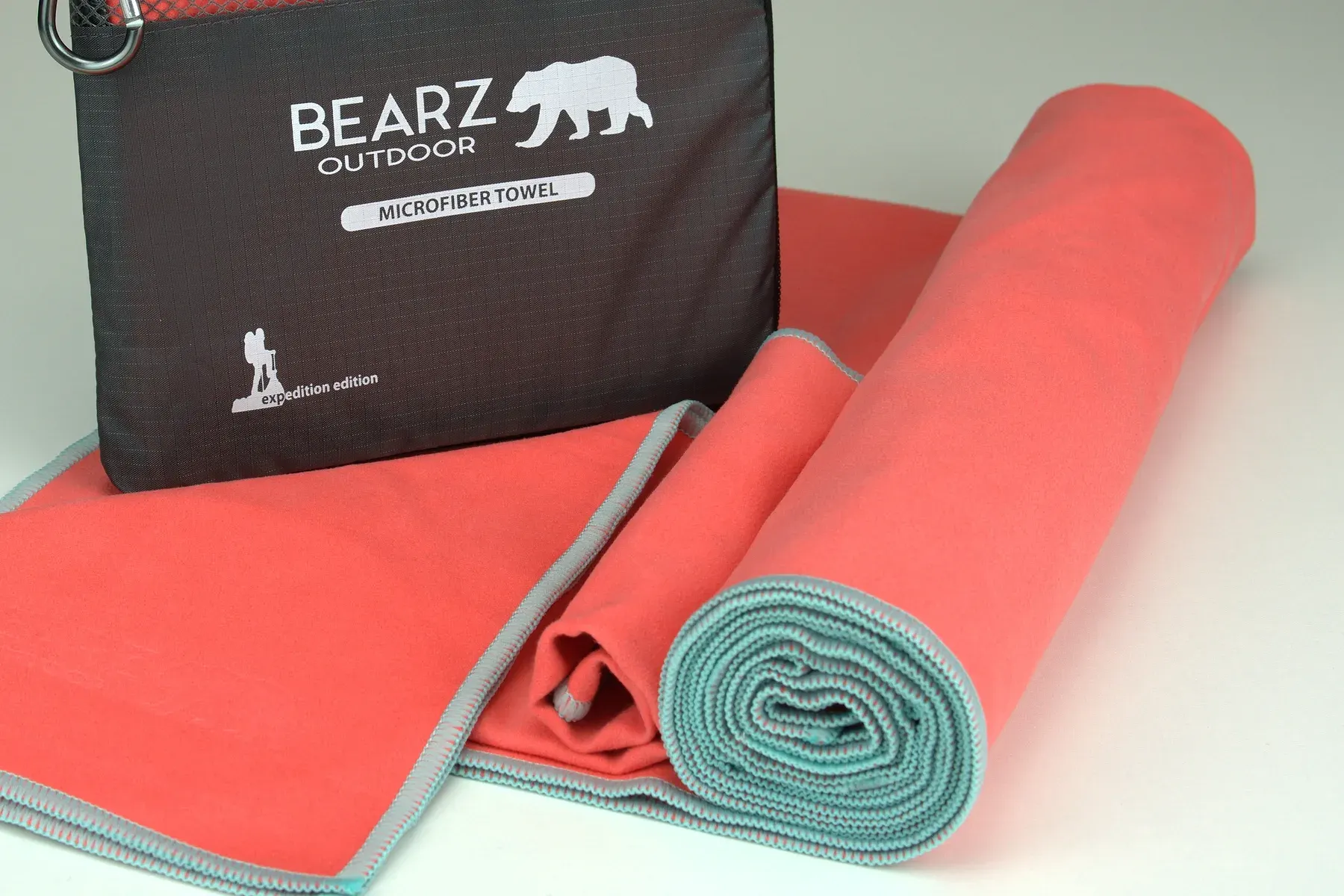
If you’re heading home from the pool with a damp towel, keep it in a separate wet bag until you can hang it up. Save the gap beside the shirts for something dry.
Packing cube questions
Do packing cubes work in a small carry-on?
Try a shallow organizer for the things that scatter when you reach into your carry-on luggage. In a personal item with a narrow opening, test whether you can pull out the full pouch with the bag upright. If you have to empty the bag to find your sweater, pack the sweater loose on top.
Is it better to roll or fold clothes in packing cubes?
Run your hand across a folded button-down. If you like the way the collar and placket lie, pack it that way. For leggings or tees, try a row of rolls you can lift out individually. You can also leave the shirt flat under the lid and use a pouch just for socks.
More from the Journal