In this guide
How to wash microfiber towels, the short version
- Wash them cold with like colors and hang them to dry.
- Use a little detergent, and skip the bleach and the fabric softener.
- Yes, the washing machine is fine.
- Wash a new towel once before you use it.
The care line of our own BEARZ Outdoor set reads: wash before first use, cold wash with like colors, no bleach or fabric softener, hang to dry. The label on your towel has the last word.
Below is the why behind each step, so you know what you can bend and what you can’t. This guide is for microfiber towels you dry yourself with: bath towels, travel towels and beach towels. Cleaning cloths are a different job. We leave them out.
How to wash microfiber towels, step by step
- Check the care label. It beats any guide, this one included. On a US label, “cold” for a machine wash means water up to 86 °F (30 °C) under the federal care labeling rule. On a label with care symbols, the number in the wash tub is the highest temperature in degrees Celsius.
- Wash a new towel before first use. One travel towel maker says a small amount of dye might bleed from its towels, so it asks for a first wash with like colors. A maker of microfiber cloths adds that the first wash removes leftover lint and dye from manufacturing.
- Sort by color. Wash it with like colors, meaning colors of similar hue and intensity. Nylon, one of the fibers in microfiber, picks up dye in the wash, according to a university extension fiber guide.
- Choose a cold wash. The travel towel maker quoted above asks for cold water too.
- Use a little detergent. More is not better: the same cloth maker says extra detergent will not make microfiber cleaner and leaves a residue on the fibers.
- Leave out bleach and fabric softener. The reasons are in the table below.
- Hang it to dry and skip the iron. Drying has its own section further down.

- 1A wash tub with a number: the highest wash temperature in degrees Celsius.
- 2The word “cold” on a US label: water up to 86 °F (30 °C).
Is the towel full of sand and salt water? That part has its own guide: how to wash beach towels.
What is a microfiber towel?
A microfiber towel is made of very fine fibers of polyester and polyamide (nylon). How that compares with cotton is its own question: are microfiber beach towels good?
What to avoid when washing microfiber towels
| Avoid | Why | Source |
|---|---|---|
| Fabric softener | It leaves a film on the fibers and clogs them | Care instructions from a maker of microfiber cloths |
| High heat: a hot dryer or an iron | Polyester and nylon melt if they get too hot | University of Georgia Extension fiber guide. The cloth maker says the same: high heat will melt the fibers |
| Bleach | It breaks down the fibers and makes them fragile | The same cloth maker |
| Too much detergent | It leaves a residue on the fibers and does not get them cleaner | The same cloth maker |
| A load of cotton towels | Microfiber picks up their lint | The same cloth maker |
The care FAQ of one travel towel maker lists three of the same don’ts for its own towels: no bleach, no iron, no fabric softener.
Granted, most of these reasons come from a maker of cleaning cloths, not bath towels. We use them because the towel maker’s FAQ and our own care line ask for the same things, without saying why.
How to dry microfiber towels
Hang the towel to dry.
Drying, as the care lines say
| Care line | Drying |
|---|---|
| Our product The care line of our travel towel | Hang to dry |
| The travel towel maker quoted above, for its towels | Air dry or tumble dry on low |
So if your label shows a dryer symbol, keep the heat low, for the reason in the table above.
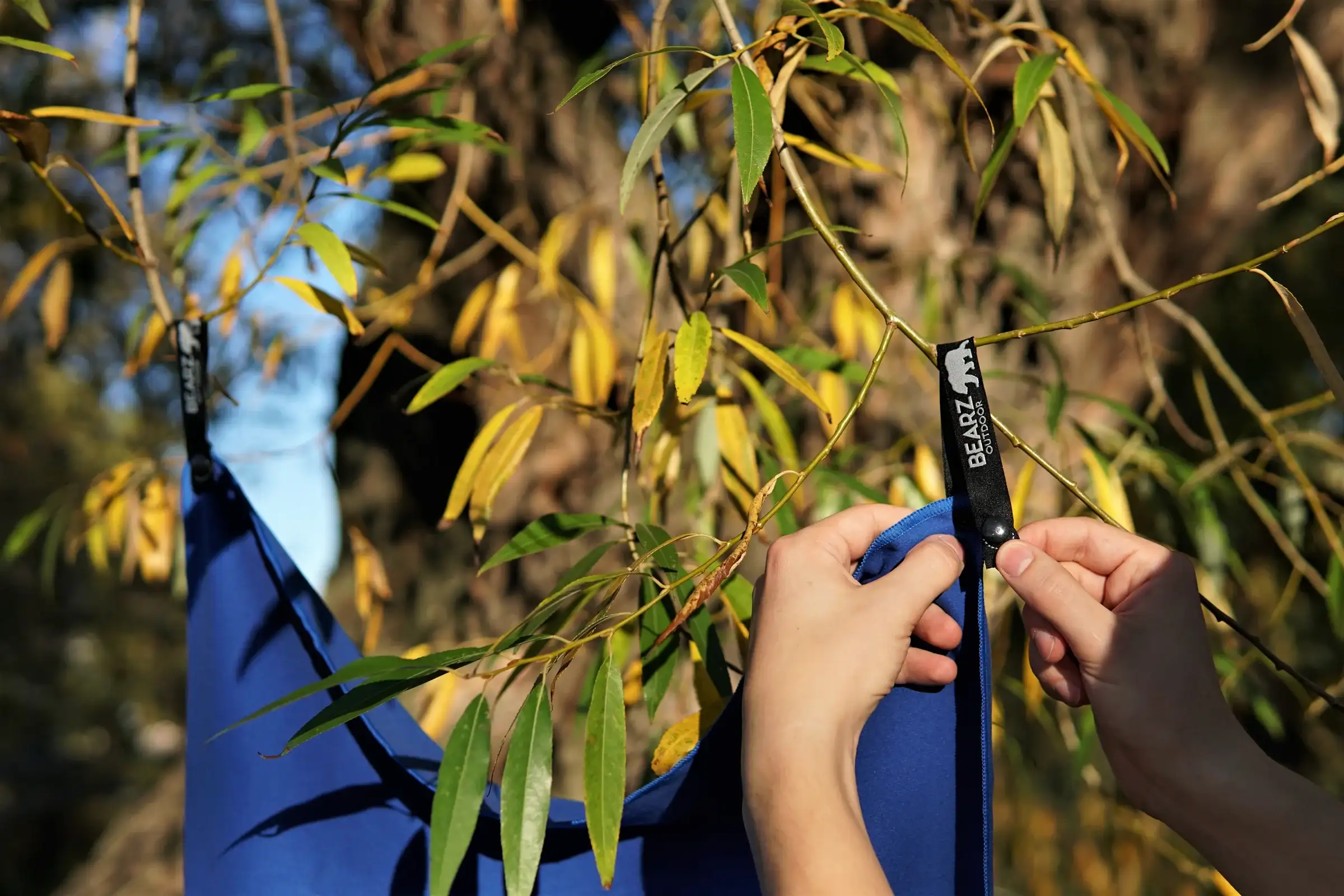
A hook, a rail, a clothesline or a branch will do.
Fold the towel and put it away only when it is dry all the way through. The same towel maker says to dry a towel thoroughly before storing it for long periods. If your towel already smells, here is how to keep a travel towel from smelling musty.
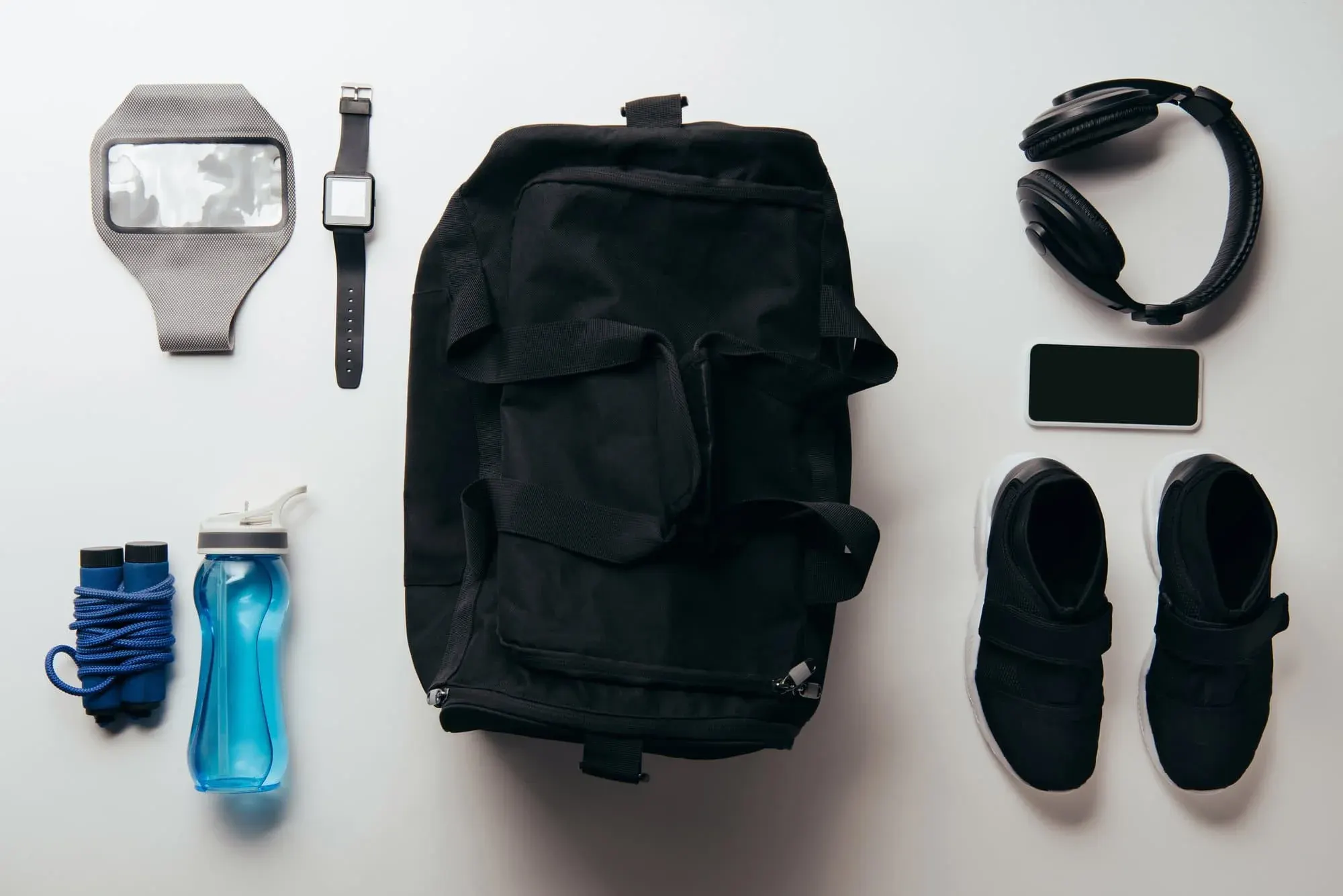
The same goes for the towel on your list of what to pack in a sports kit bag: take it out and hang it after every session.
Camping towel care: before, during and after a trip
When you’re out camping, washing towels isn’t at the top of your mind. Most of the care happens at home, before you pack and after you get back.
Before the trip
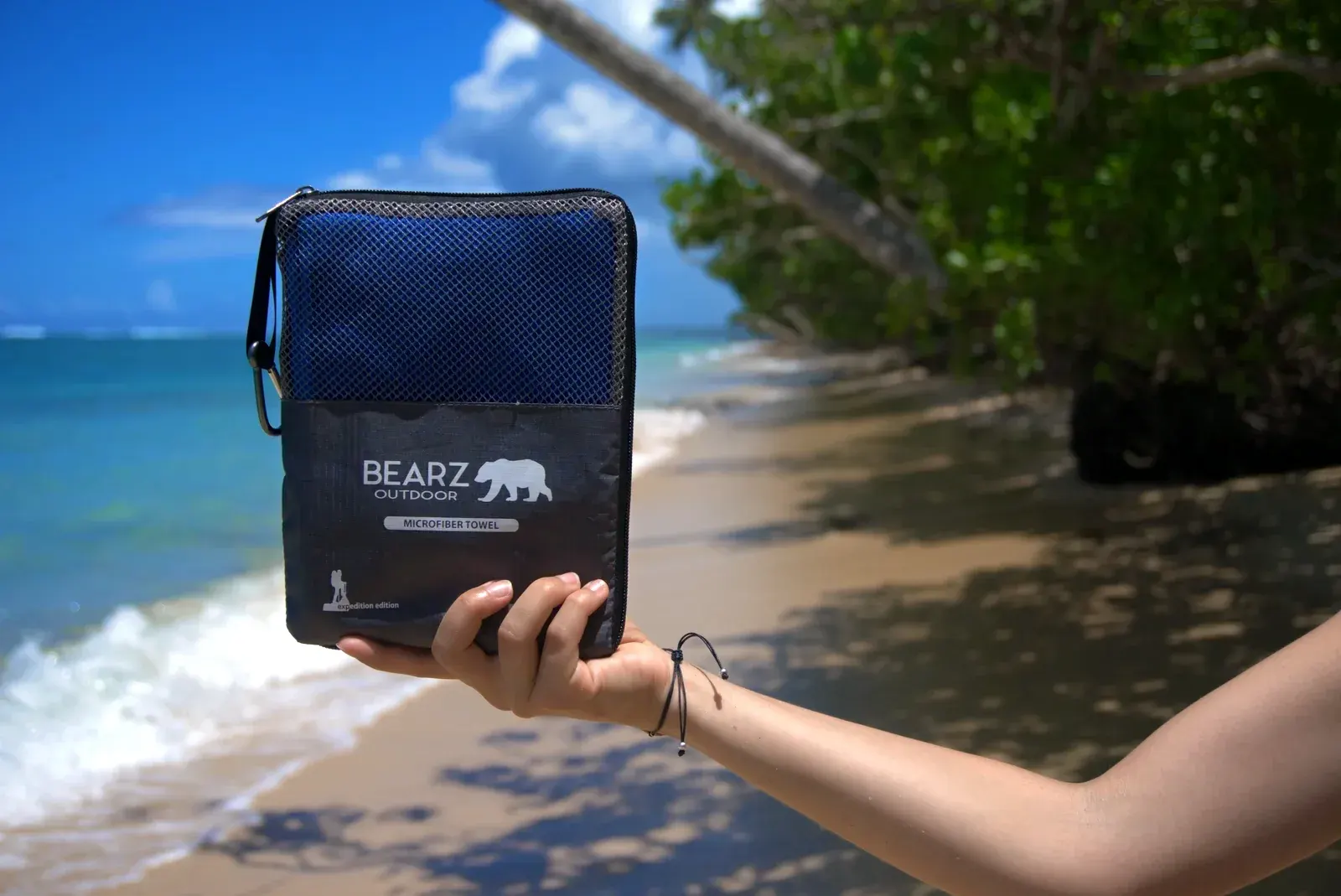
Still choosing a towel for the trip? See how to choose a travel towel. Wash and thoroughly dry a new towel before you take it along. If you won’t be leaving right away, you can store the towels in the carry bag and keep them with your camping gear until it’s time to pack.
During the trip
After each use, hang the towel to dry so it doesn’t start to smell. If you need to, you can clip it to your backpack or hang it from a branch while you pack up camp.
Remember that sharp surfaces like rocks and sticks could snag or rip the fabric.
After the trip
Back home, clean and dry your camping gear before you pack it all away. Wash the towels as in the steps above: cold, with like colors, without bleach or fabric softener. After the wash cycle, pull your towels out and hang them up to air dry.
Once everything is clean and dry, store it somewhere that stays dry. Keep the towels with your camping gear, so you don’t forget them the next time you take a trip.
Microfiber towel care: short answers
Can you wash microfiber towels in the washing machine?
Yes. Use a cold wash with like colors and a little detergent, and leave out bleach and fabric softener. One travel towel maker describes all of its towels as machine washable.
Do you need to wash microfiber towels before first use?
Yes, wash a new towel once before you use it. Two makers give the reason: a new towel can carry leftover dye and lint from manufacturing, and a little of that dye might bleed.
Can you wash microfiber towels with regular towels?
You can, if the colors are alike: the towel care lines quoted here ask for nothing more. A maker of microfiber cloths says to wash microfiber apart from cotton towels and clothes, so it doesn’t pick up their lint. If lint on your towel bothers you, give it its own load.
Can you put microfiber towels in the dryer?
Only if the label allows it, and then on low heat. When in doubt, hang the towel up.
More from the Journal