In this guide
To choose a camping blanket, first decide which kind you need: a warm blanket to sleep under or a thin ground blanket to sit on. Then weigh five factors: weather, material, weight and size, purpose, and durability.
The five factors
Any keen outdoors person knows there is just no substituting good gear, and a blanket belongs on your list of important things to take camping. Using your jacket as an extra layer might be okay for a night. But spend multiple chilly sleepless nights in a tent and you will wish you had packed a warmer blanket!
And when choosing a camping blanket, there is a lot to consider. Aside from the cost, the type of camping and outdoor activities you enjoy will affect what is ideal for you.
This is our guide on how to choose a camping blanket that fits all your needs.
1. Weather and Climate
There are so many different types of camping blankets, the choice can be overwhelming. You do not want to spend your hard-earned money on the wrong camping blanket.
Considering the types of weather and climate in which you will be using your new camping blanket is a great place to start.
What each kind of weather asks of a blanket
| Weather | What the blanket needs |
|---|---|
| Warm: above 60°F (16°C) | No insulation. Moisture or sweat-wicking would be a useful feature. |
| Cold: below 40°F (4°C) | A warm camping blanket that insulates and traps heat. Consider wind chill too. |
| Wet | A water-resistant blanket helps keep damp ground off you. |
Warm and cold are this guide's own rough bands.
Warm Weather
It’s a matter of preference, but in this guide, anything above 60°F (16°C) counts as warm. In this type of climate, a camping blanket wouldn’t need to be insulated. But moisture or sweat-wicking would be a useful feature.
When it’s hot outside, you still need cover. And where there’s heat, there’s often insects which you will want to keep out!
Cold Weather
Cold weather camping or outdoor activities offer different challenges. In this guide, cold means anything below 40°F (4°C), and you may need to consider wind chill too.
You will need a warm camping blanket that insulates and traps heat.
Wet Weather
You will need a water-resistant blanket if you are camping in wet weather, no ifs or buts! A water-resistant blanket helps keep damp ground off you. Even if you are camping in warm weather, it will not feel very warm if you’re soaking wet.
If you are camping in rainy conditions, a microfiber towel is also a good idea. That way, you can dry off properly before using your camping blanket.
2. Material: Wool, Plastic, Polyester or Fleece
Weather decides which material or fabric you want in a camping blanket. Here are some of the typical materials used to make camping blankets and their properties so you can decide which suits you.
Camping blanket materials
| Material | Strengths | Downsides |
|---|---|---|
| Wool | Wet, it loses only some of its insulating ability. Not readily flammable. Takes up moisture as vapor. | Not the most comfortable fabric. Can be very bulky and heavy. |
| Plastic (emergency or thermal) | A thin plastic sheet with a heat-reflective metal coating. Folds up small. | Not hard-wearing or durable. Not comfortable to sleep under or sit on. |
| Polyester | A light synthetic fiber. Keeps most of its insulating ability when wet; some fabrics are made to wick sweat. Durable, with a nice feel. | Check the care label before it goes in a dryer. |
| Fleece | Traps air between fibers. Very insulating and, unlike wool, lightweight. | Like other synthetics, it can melt and drip in a flame: not ideal around a campfire. |
Wool
It is a natural fiber of which there are many different kinds (merino wool, lambswool, etc.). And when wool gets wet, it loses only some of its insulating ability.
It is also not readily flammable, and it takes up moisture as vapor.
However, wool is not the most comfortable fabric. Plus, it can be very bulky and heavy compared to other materials.
Plastic (Emergency/Thermal)
An emergency or thermal blanket is a thin plastic sheet with a heat-reflective metal coating.
These kinds of materials fold up small, which is ideal for packing light.
However, these materials are not hard-wearing and durable. And don’t make for the most comfortable of blankets to sleep under or sit on!
Polyester
Polyester is a light synthetic fiber. It keeps most of its insulating ability when wet, and some polyester fabrics are made to wick sweat away.
Polyester is also a durable material with a nice feel to it.
Check the care label before it goes in a dryer, or leave it to dry by itself.
Fleece
Fleece is a synthetic wool alternative and has many of wool’s qualities such as the ability to trap air between fibers. It is also very insulating and, unlike wool, is lightweight.
3. Weight and Packed Size
Weight and size are two key factors to consider when choosing a camping blanket. Though you want one that will keep you warm and dry, you need to keep in mind that you will be carrying this blanket too!
First, think about how you normally explore the outdoors. Do you go on day hikes, venture on multiday treks, or drive up to a camp spot? If you drive, you probably don’t need to worry about weight and size and can prioritize comfort.
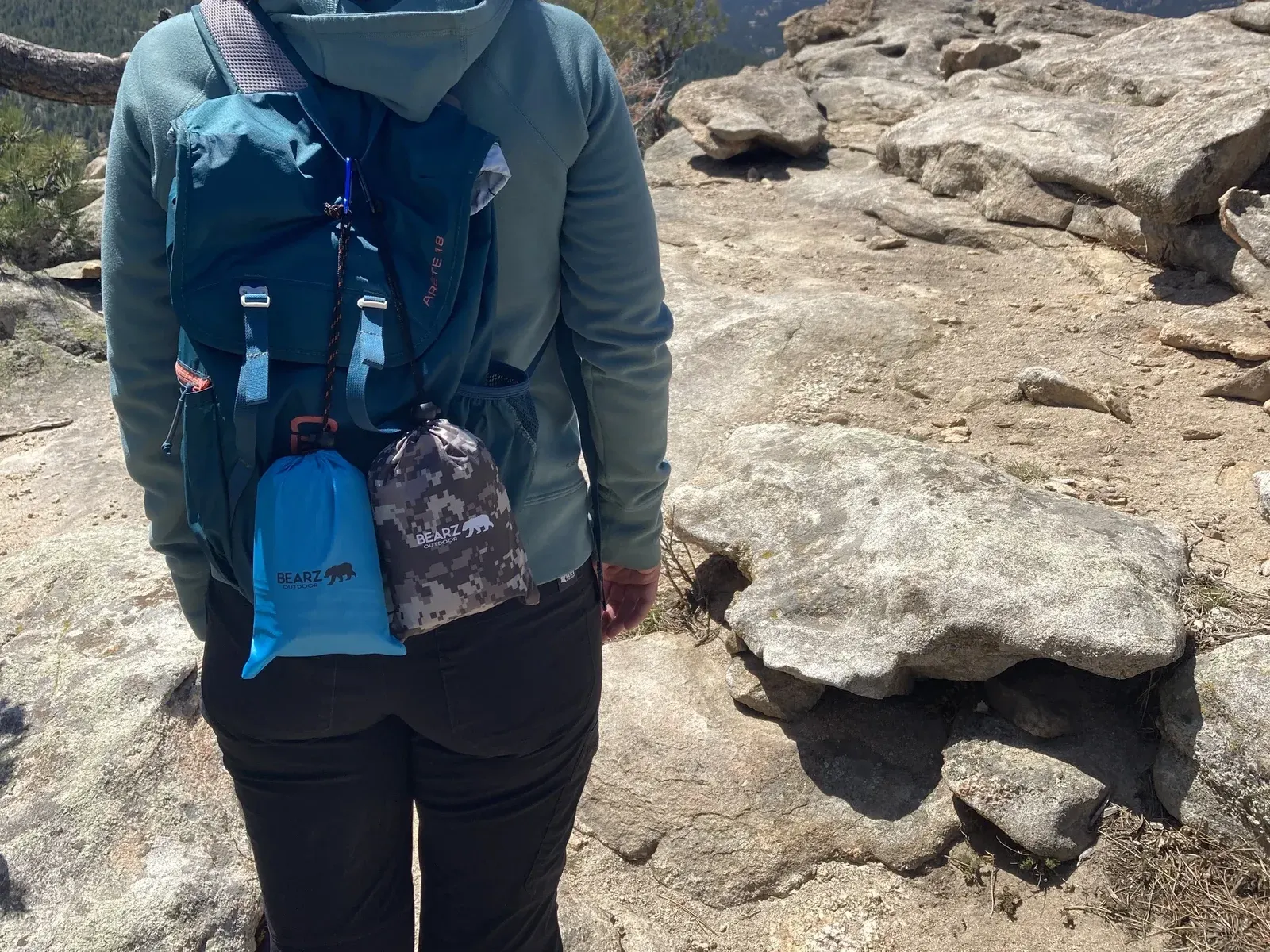
But if you carry your weight, this might be the most important consideration for you. Opt for a blanket that packs small and can hang from the outside of your pack. That way, it will take up next to no space and be easily accessible when you need it. Hiking with your dog? Leave room for our dog hiking essentials too.
4. Purpose: Warmth, Ground Cover or Both
Another factor is how you intend to use your camping blanket. Good gear often has more than one use.
Do you intend to use your camping blanket primarily as an extra layer? Or is it likely to be used as a picnic blanket, beach towel, or even a yoga mat?
Considering how you will use a camping blanket will affect the right kind of camping blanket for you. Down insulated and cozy camping blankets do not make great tarps!
Ground Blanket or Warm Blanket?
These are two different jobs, so decide which one you are shopping for. A warm camping blanket, like the wool, fleece and insulated kinds above, goes over you or around you to hold in heat. A ground blanket is a thin sheet that goes under you, between you and the grass, sand or dirt.

- 1A warm camping blanket goes over you or around you to hold in heat.
- 2A ground blanket is a thin sheet that goes under you, between you and the grass, sand or dirt.
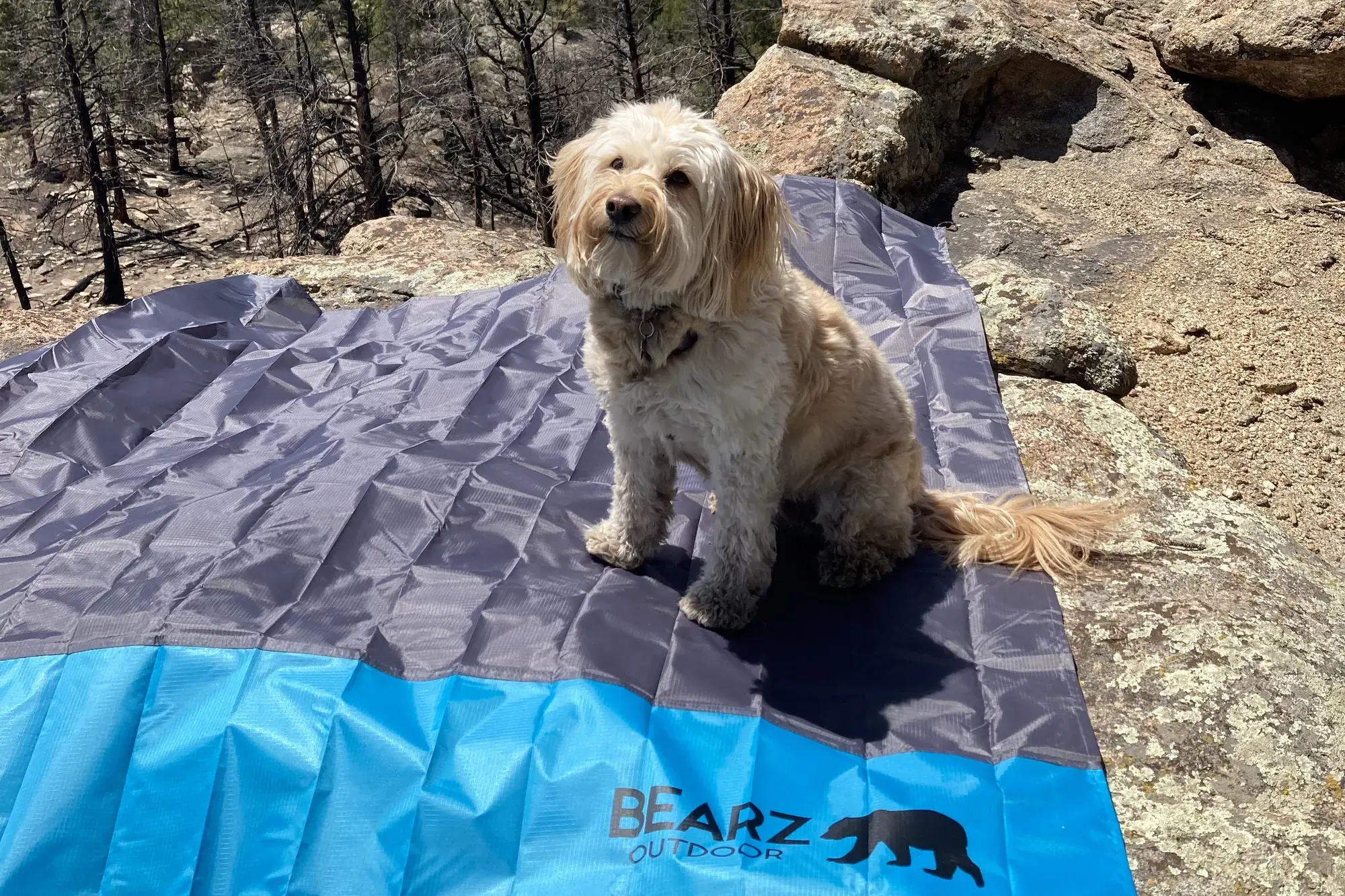
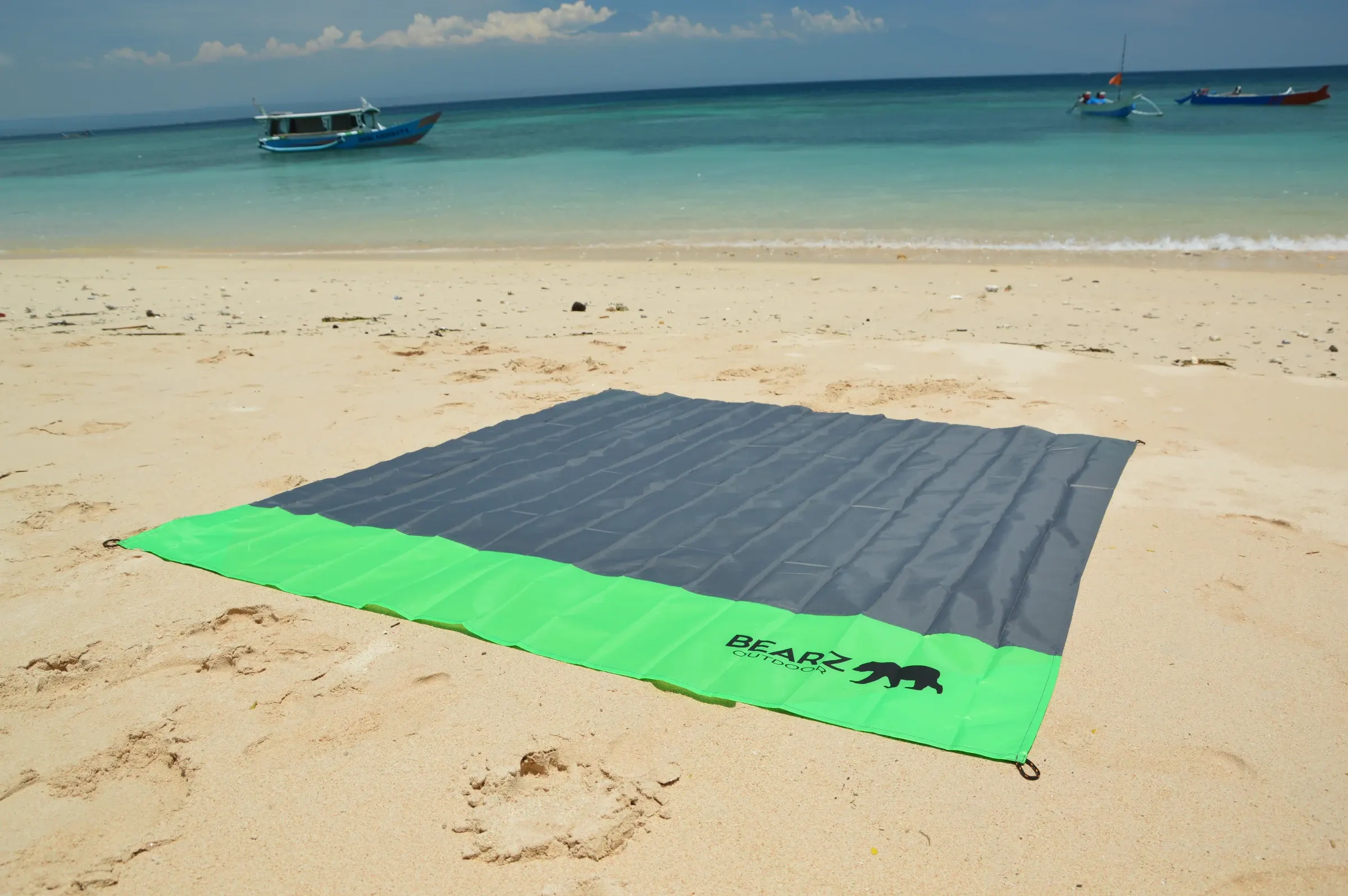
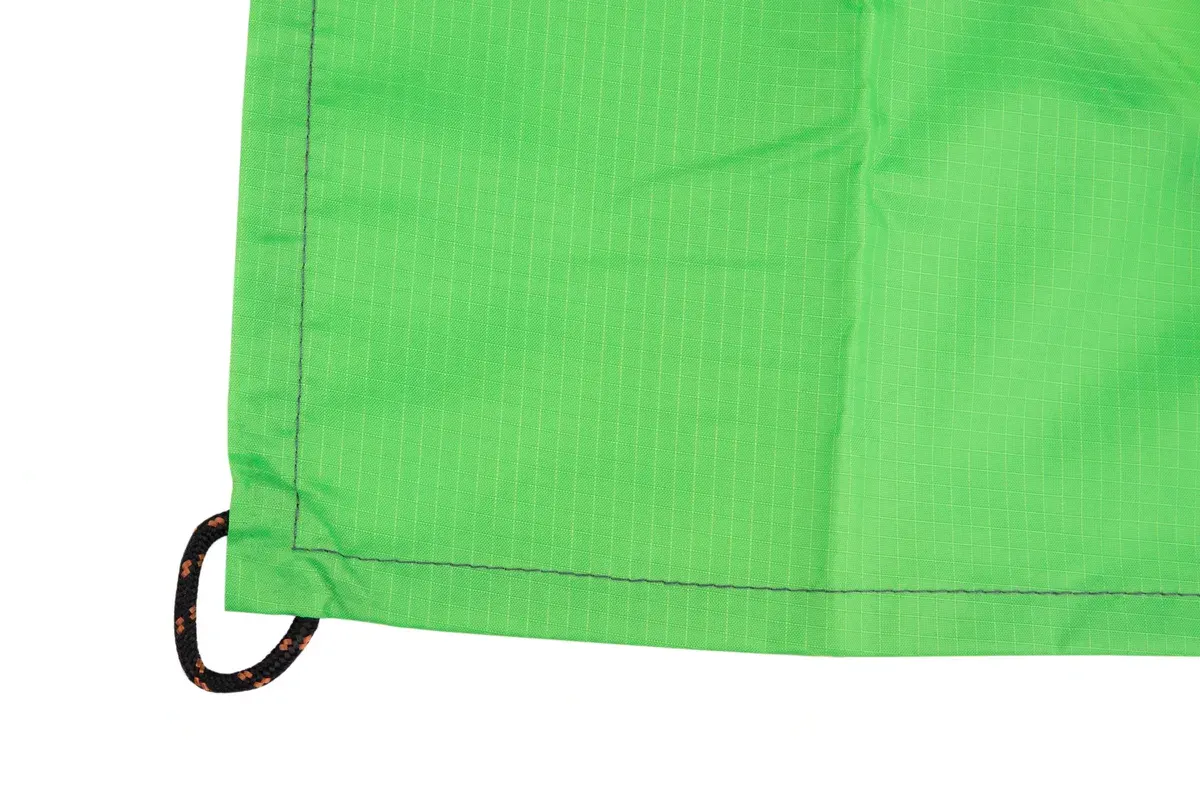
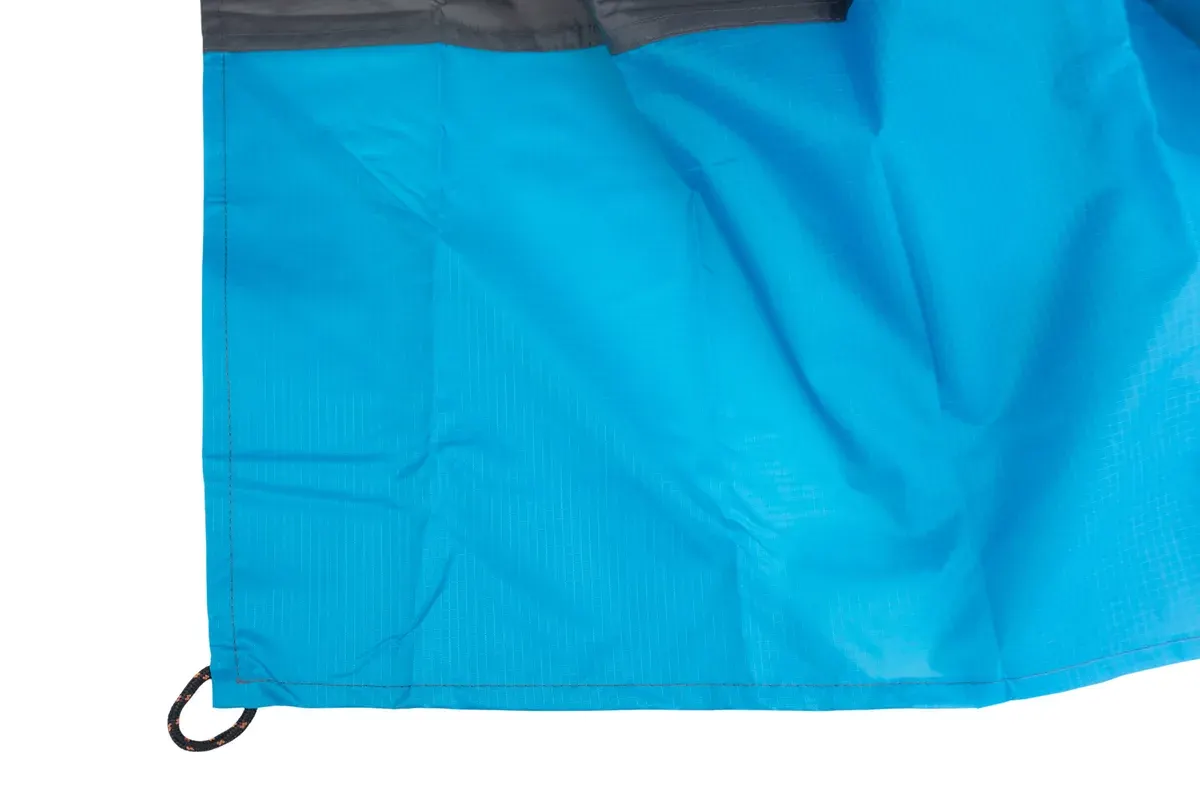
Our own blanket is the second kind. The BEARZ Outdoor Pocket Blanket is a thin, water-resistant ground cover made of polyester, not a warm camping blanket. It opens to 55 x 60 in (140 x 152 cm), weighs 6.4 oz (0.18 kg) and has room for two adults to sit.
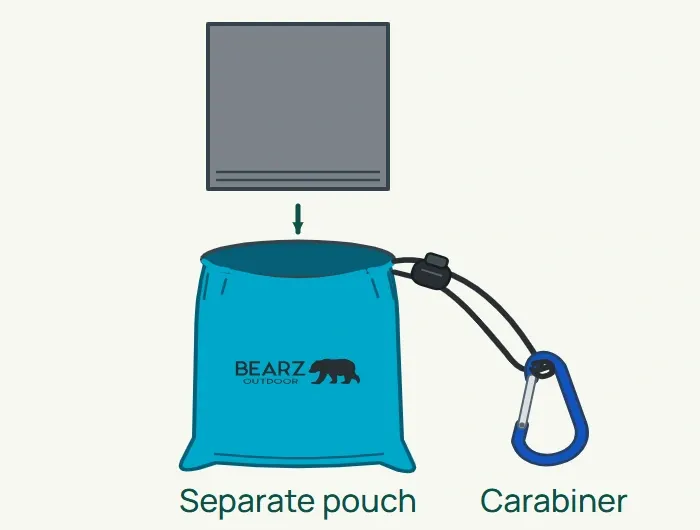
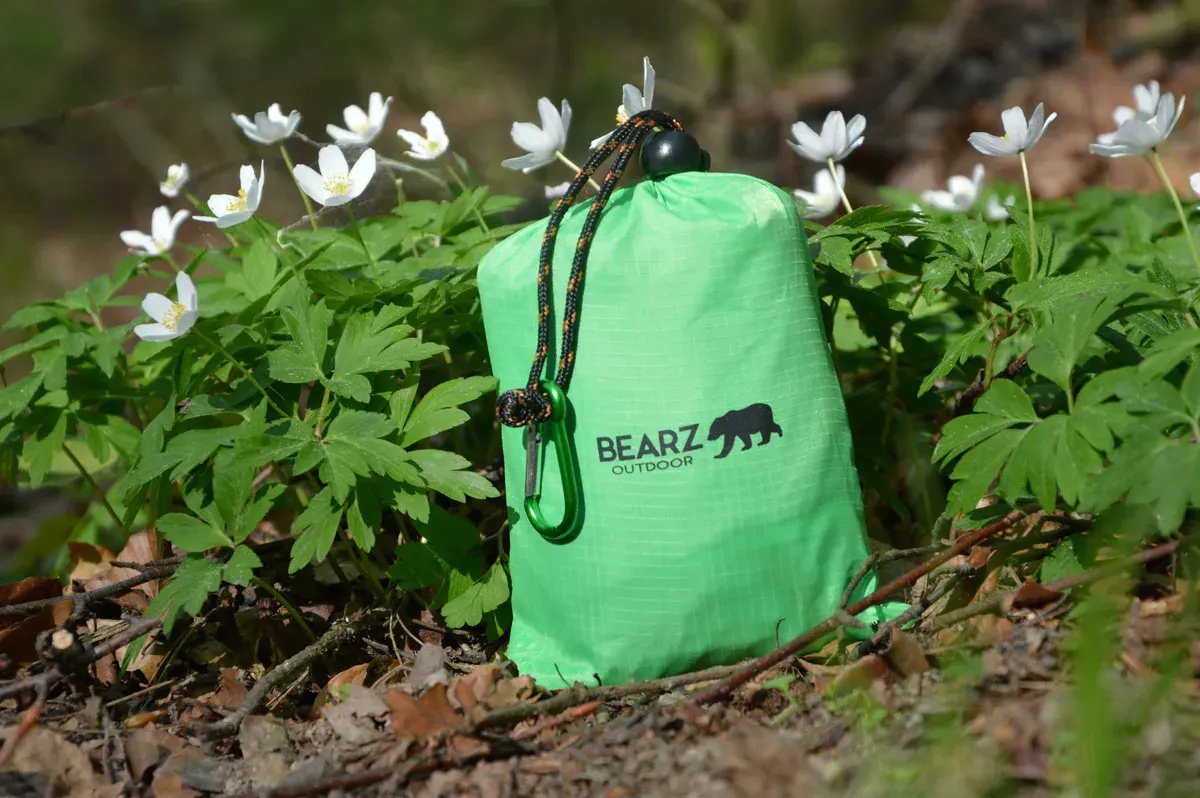
What you get in return is the packed size. It folds into a pouch of 4.5 x 3.5 in (11.5 x 9 cm) that comes with a carabiner, so it can hang from the outside of your pack. Our fold guide shows how to fold it back into the pouch.
If you need both jobs done, bring both: a warm blanket for the tent and a ground blanket for sitting outside it, whether for meals or card games for camping.
5. Durability
Finally, look for a camping blanket that lasts. You do not want to buy gear that is only good for a handful of trips. It’s a waste of money, and you don’t want your gear breaking mid-adventure.
Five ways to make a camping blanket last:
- Before you buy, look at the edges and corners. Loose threads or gaps in the stitching are a bad sign. Read the care label too, so you know what the blanket needs.
- Match the blanket to the job. A thin plastic emergency sheet is not hard-wearing, so keep it for emergencies rather than every trip.
- Clear the spot first. Move sharp stones and sticks before you spread a ground blanket, and lift it rather than drag it.
- Keep it away from the campfire. Synthetic fabrics such as polyester and fleece can melt and drip in a flame.
- After the trip, follow the care label and pack it dry.
The Right Camping Blanket for Your Trip
Searching for the “best camping blanket”? Now you know what to check for the climates and activities you enjoy.
Start with the job, warmth or ground cover. Then let weather, material, weight and durability narrow the choice.
More from the Journal